
Anode Scrap Processing Line Design
Design an anode scrap line around residual slime first, then match stacking buffers and charging rate so the converter bath stays stable during converting.
Scrap Characterization
Spent anodes leave the electrolytic cell with a slime layer that varies by position and campaign, so the scrap stream is not uniform. In a copper refinery the line may see full plates, bent sheets, and stacked bundles, and each form changes how the material can be lifted, washed and charged. Characterize the scrap by residual slime mass, sheet straightness, and whether the anode is handled singly or in a stack. Those three inputs set the washing trigger, the clamping arrangement, and the downstream charging route. If this step is skipped, the washing unit and charger are sized around an average that does not exist.
Sample the spent anodes across the electrolysis circuit rather than at one take-off point. Record slime thickness on the top and bottom faces, the presence of nodules or adhered copper, and the bend at the base of each sheet. A plate that is bent beyond the charger's entry envelope must be straightened or diverted before it reaches the Plate-Type Anode Scrap Charging Machine. For stack handling, record bundle weight and stack stability after washing, because a wet stack that has lost its shape will not index reliably on the Stacked-Type Spent Anode Charging Machine.
Washing and Drying
The Spent Anode Washing Unit is the fixed point of the line: sensors detect residual anode slime, and when the residual reaches a set value the controller starts the automatic transport mechanism. Anodes move from the electrolytic cell along the transport track into the washing chamber, where hydraulic clamps secure each plate. A detector converts the slime reading into a signal that sets feed-water pump speed, and dynamic and static spray headers wash the plate at a pressure matched to the slime load. The control logic therefore links wash intensity to measured condition rather than to a fixed cycle.
Drying follows washing in the same unit, after which the anodes are stacked, baled and transferred. Do not specify a separate dryer until you know the residual moisture that the downstream charger can tolerate; the Spent Anode Washing Unit is described as integrating air-drying, not as feeding a separate dryer. Keep the spray headers accessible for inspection and provide a drain path that does not wet the baled stacks. If the plant washes mixed scrap, validate the slime sensor on each sheet geometry before tying pump speed to the signal.
Stacking and Transport
Stacking begins as soon as the washed anode leaves the drying position. The stack is the handling unit for the stacked charging route, and its geometry must match the charger's head, chute and centring mechanism. A 1.4 t stack is the rated unit for the Stacked-Type Spent Anode Charging Machine, so the stacking station should build to that weight and shape rather than to a nominal count of plates. Baling and transfer equipment must hold the stack square during travel; a twisted stack will jam at the charging inlet even if its total weight is correct.
Transport between washing, stacking and charging is a buffer problem, not only a speed problem. The charging machine travels at 0.1 m/s and feeds at 0.3 m/s, so the time to reposition is part of the converter cycle. Size the stack buffer to absorb the 72 s/stack loading cycle and the interval between converter charges, and keep the transfer path clear of the washing unit's discharge. For plate charging, the buffer is a singulated sheet queue rather than a stack; the Plate-Type Anode Scrap Charging Machine needs each sheet presented separately.
Return to Furnace
Two return routes are available, and they should be selected from the scrap form rather than from a preference for one machine. The Stacked-Type Spent Anode Charging Machine charges one stack at a time into the converter through the water-jacket charging inlet, with intelligent counting and weighing displaying accumulated stacks and total weight. The Plate-Type Anode Scrap Charging Machine charges spent-anode sheets into top-blown converting furnaces one sheet at a time, with each sheet bent at its base before lifting. Both use PLC control, but their feed envelopes and cycle structures differ.
| Charging route | Feed form | Throughput | Control mode |
| Stacked-type | 1.4 t stacks | 70 t/h | PLC |
| Plate-type | Sheets ≤84 kg | 200–400 pieces/h | PLC |
The stacked route suits a converter campaign where cold material arrives as bundles and the charging inlet can accept a discrete stack. Its 72 s/stack cycle and 70 t/h charging capacity set the converter's cold-feed rhythm; the weighing display lets the operator stop at the required stack count. The plate route suits sheet scrap that must be protected from refractory damage during charging, and its 200–400 pieces/h capacity depends on singulation. Neither route tolerates bent or fused scrap, so washing and inspection must release only material that fits the respective feed envelope.
Automation and Safety
Automation on this line is mostly sequence control, not unattended operation. On the stacked charger, PLC control covers automatic distribution, charging, counting and weighing; the electrically actuated head tilting chute and centring mechanism replace hydraulic actuators and reduce maintenance around the hot inlet. On the plate charger, PLC control coordinates the bend, lift, convey and charge steps so that only one sheet enters the furnace at a time. The washing unit's controller ties slime detection to transport, clamping and spray pressure, which means the safety logic must treat the clamp and spray chamber as one interlocked zone.
ZXSZ builds the Spent Anode Washing Unit around sensor-triggered slime measurement, hydraulic clamping and spray-header control, so the line's safety case should follow that sequence rather than a manual wash cycle. Provide local isolation for the clamp, the feed-water pump and the transfer track, and arrange inspection access without opening the spray zone. For the chargers, interlock the head tilt and centring mechanism with the converter inlet position; a PLC that counts stacks but does not confirm the chute position is only a tally, not a charging control.
For the design file, fix three setpoints before layout: the slime level that starts a wash, the stack weight and geometry accepted by the stacked charger, and the sheet weight accepted by the plate charger. Then check that the buffer between washing and charging can absorb the 72 s/stack cycle without letting wet stacks stand long enough to deform. These three decisions determine whether the line runs as a single scrap route or splits into two.
Related equipment
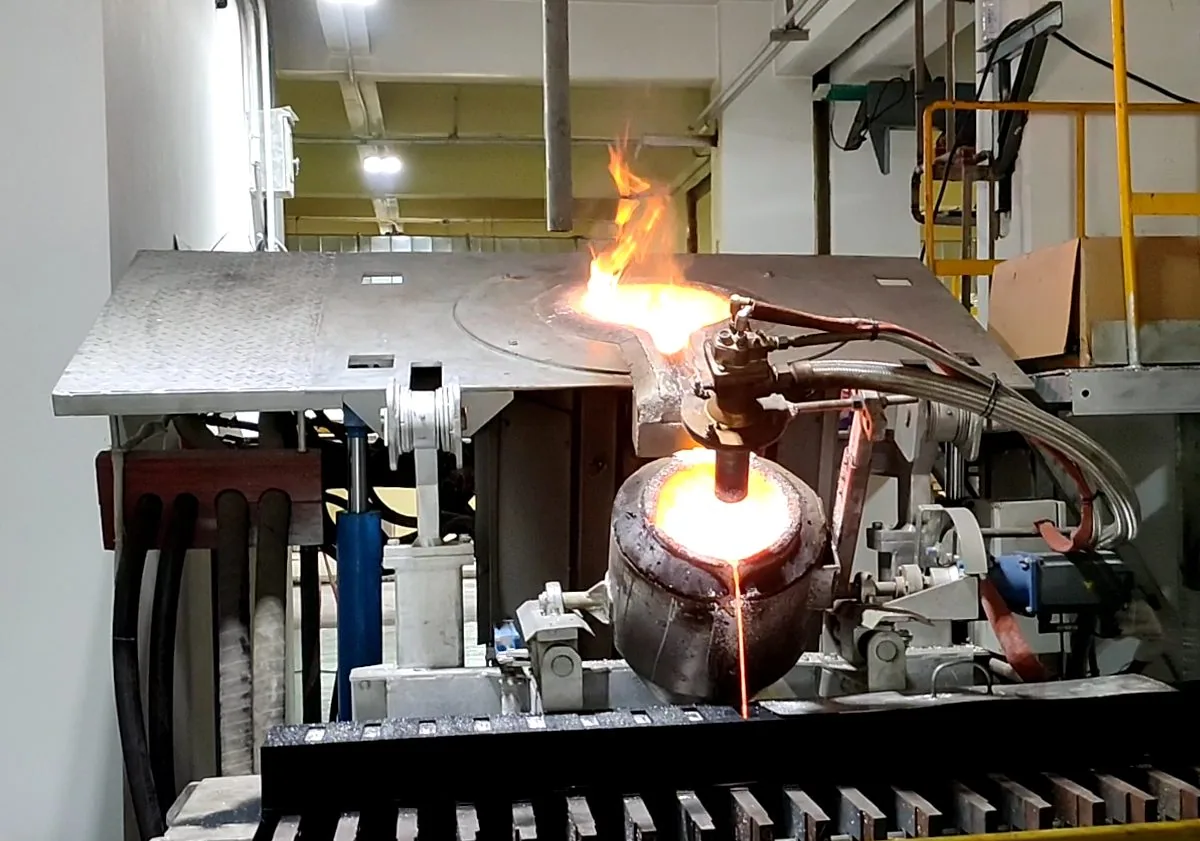
Linear Silver Ingot Casting Machine
For pure silver ingot producers, casting 15 kg ingots: silver powder melting, deoxidation, casting, post-treatment (washing, grinding, marking) and palletising in one line.
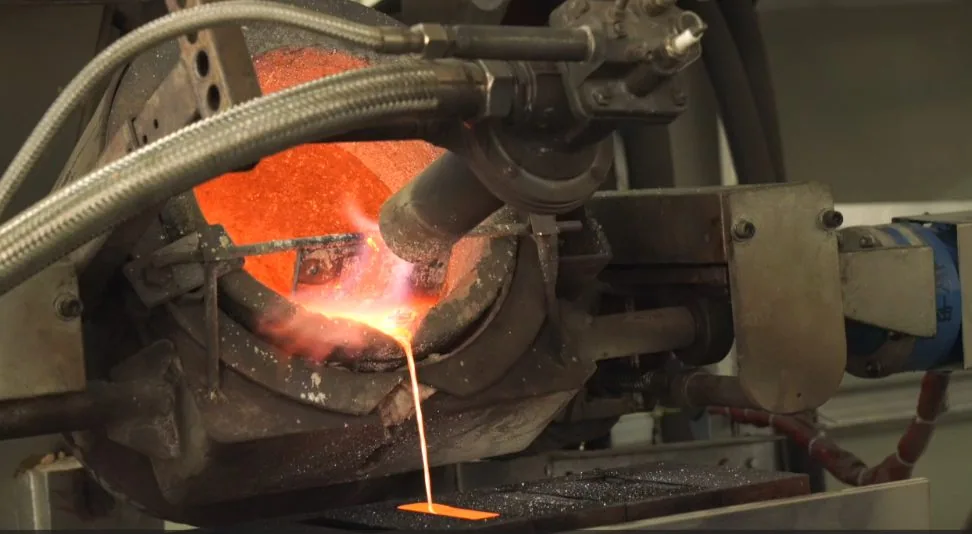
Linear Silver Ingot Casting Machine (15 kg / 30 kg Dual-Purpose)
One machine, two ingot sizes.
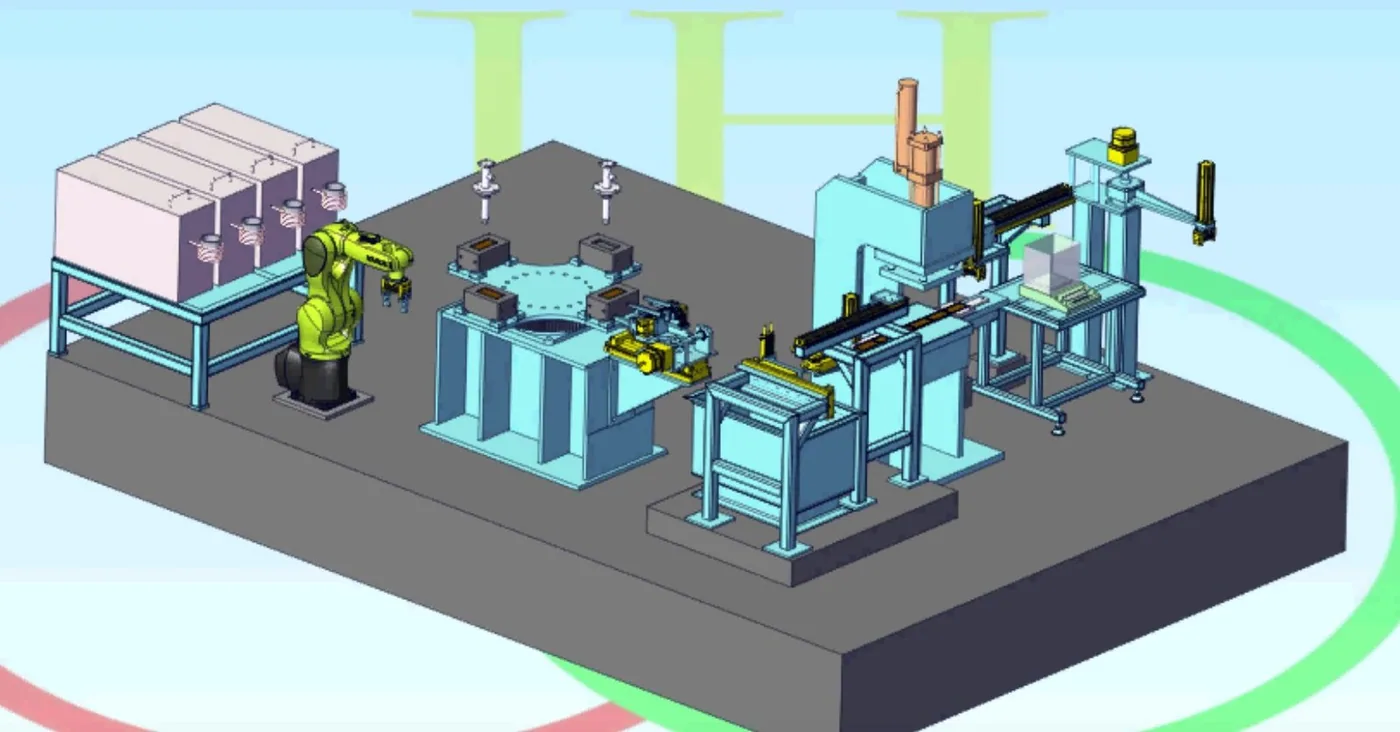
Automatic Gold Ingot Casting Machine
Automated equipment for precious-metal casting, using vacuum or pressure technology for loss-free, oxidation-free ingot forming.
Send us your specification
Tell us the metal, anode or ingot weight, and required output. An engineer will reply within one business day with a configuration and a quotation.