
Copper Anode Casting Line Commissioning Checklist
A stage-by-stage walkthrough of cold trials, first heat and performance testing so the anode weight accuracy of ±1% is proven before handover.
An anode casting line is accepted on statistics, not on a demonstration. A machine can index correctly and pour clean plates all afternoon, then miss the weight criterion of ±1% on ≥98% of plates once mould temperature drifts across a full shift. The sequence below keeps mechanical and metallurgical evidence separate: pre-commissioning checks prove the installation, cold trials prove the motion and interlocks, the first heat proves the pouring recipe, and the performance test proves the statistics before handover.
Pre-Commissioning Checks
Start with the mechanical installation, not the control system. Confirm turntable level against the foundation drawing, check that the ladle clears the mould train through a full revolution, and rotate the disc by hand before any servo is energised. Verify the central dual-servo disc drive is coupled and aligned, that the mould temperature control circuit holds pressure, and that the barium sulphate dry-powder coating station is mounted at the working height above the mould face. Any of these found late will be blamed on the casting recipe during the first heat.
Utilities come next. Confirm the PLC and host computer exchange data, that recipes download without timeout, and that every interlock on the ladle, turntable and mould cooling loop reports the correct state. Weighing instrumentation needs a current calibration record before the first plate is poured, because the whole acceptance argument rests on it. Also walk the emergency stops and the reject path with the line empty, so that a later fault is a process problem rather than a wiring surprise.
Cold Trials
Cold trials run the entire cycle at production speed with an empty ladle and cold moulds. The purpose is repeatability: the turntable should stop at the same position every revolution, the ladle tilt profile should complete within the cycle time, and the automatic coating cycle should cover the cracked areas of each mould without manual touching. Record the parameters that will be compared later during the first heat, because a cold trial that is not logged proves nothing at handover.
First Heat
The first heat is a tuning exercise, not a production run. Pour a short series of anodes, weigh every plate individually, and adjust the quantitative casting cut-off before widening the sample. On a machine rated for 160–400 kg anodes, the cut-off that suits one plate weight will not suit another, so fix the target weight first and leave it alone. Watch the coating cycle time, nominally 3–5 s, against the actual cycle: if coating eats into the cycle, back-fin and sticking defects will appear on the anode surface later.
Mould temperature is the second variable. The automatic mould temperature control is there to hold the face condition stable over a shift, so set it early rather than chasing defects plate by plate. If the moulds are new, expect the first anodes to sit slightly outside the weight band while the mould faces settle; note them, do not compensate with the cut-off. Log every deviation with its timestamp so the performance test can distinguish a settling-in effect from a genuine control problem.
Performance Test
The performance test converts the tuning work into evidence. Run at the rated capacity of the installed model and record every plate, not a sample, across a full shift. Weight accuracy is judged as ±1% on ≥98% of plates, so the statistic must be computed over the whole shift population; a good hour is not a result. Capacity targets differ by machine configuration, so fix the target before the test begins and do not renegotiate it afterwards.
| Test parameter | Acceptance basis | Record to keep |
| Anode weight range | 160–400 kg as ordered | Individual plate weights |
| Weight accuracy | ±1% on ≥98% of plates | Shift statistic per size |
| Casting capacity | Rated plates/h of the model | Counter log full shift |
| Coating cycle time | 3–5 s per mould | PLC timestamps |
| Mould temperature | Stable across the shift | Trend chart per mould |
| Surface defects | No back-fin or sticking trend | Visual inspection sheet |
The capacity figures give a quick sanity check on the configuration under test: 120 plates/h for the single-turntable single-ladle machine, 200 plates/h for the single-turntable double-ladle, 260 plates/h for the double-turntable double-ladle and 400 plates/h for the double-turntable four-ladle arrangement. ZXSZ builds all four on the same PLC + host computer platform, so the same record format and statistics can be used across models. A shortfall of a few plates per hour at a given rating is usually a cycle-time issue rather than a casting problem.
Handover Documents
Handover is a document set, not a signature. The operator needs the parameters that actually passed the test, and the maintenance team needs the settings that were changed during tuning, including cut-off, coating dwell and mould temperature setpoint. A handover file that lists only the nominal specification will not help when the mould set is replaced, the coating thickness changes and the anode weight drifts away from the target band.
Design the acceptance protocol around the statistic, not the plate. Write the test population, the shift length and the calculation method into the purchase specification before the machine arrives, so that ±1% on ≥98% of plates is a measurable clause rather than a discussion at handover. Keep the cold trial and first heat logs in the same file as the performance test, and require the PLC trend exports to be delivered with the handover documents; those exports are the only objective record of how the turntable, ladle and mould temperature behaved while the weight criterion was being met.
Related equipment
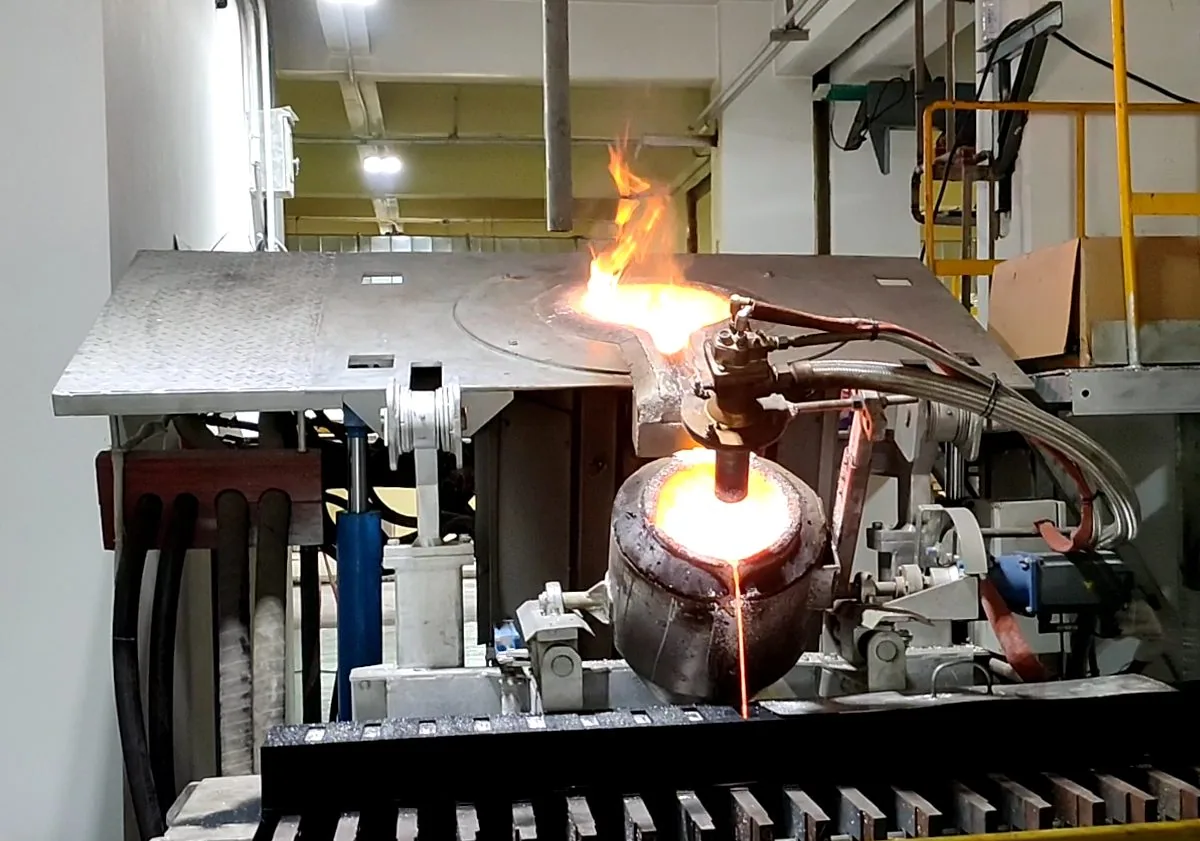
Linear Silver Ingot Casting Machine
For pure silver ingot producers, casting 15 kg ingots: silver powder melting, deoxidation, casting, post-treatment (washing, grinding, marking) and palletising in one line.
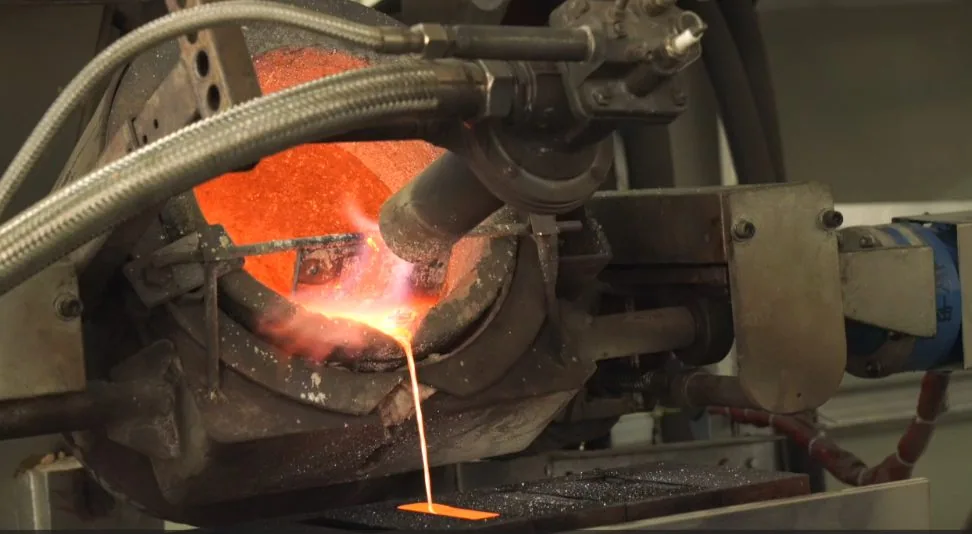
Linear Silver Ingot Casting Machine (15 kg / 30 kg Dual-Purpose)
One machine, two ingot sizes.
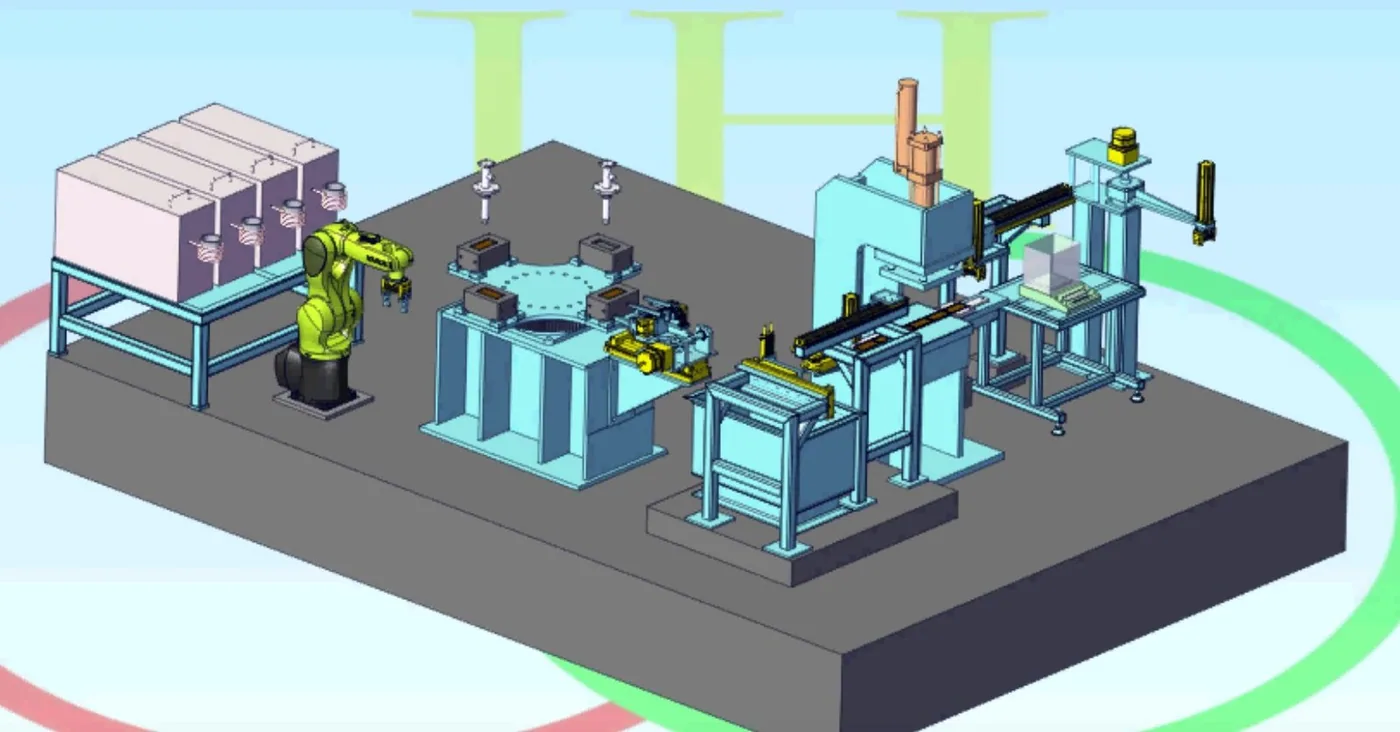
Automatic Gold Ingot Casting Machine
Automated equipment for precious-metal casting, using vacuum or pressure technology for loss-free, oxidation-free ingot forming.
Send us your specification
Tell us the metal, anode or ingot weight, and required output. An engineer will reply within one business day with a configuration and a quotation.