
Nickel Electrolysis Equipment and Anode Handling
Weight accuracy and mould positioning drive nickel cell room results, and this guide sets out casting, cathode handling and retrofit scope in practice.
Cell Room Basics
In a nickel refinery the cell room sets the specification for every machine upstream of it. Anode plates hang in the electrolyte at a pitch fixed by the busbar arrangement, and each plate has to present the same submerged area, the same lug geometry and a comparable mass. Differences in anode weight change the dissolution rate, the anode-to-cathode gap and the slime fall pattern in the bag, so the casting line must work to a weight window rather than to a nominal figure.
That has a practical consequence for procurement. A machine that pours an average 82 kg anode but scatters individual plates across a wide band will not hold cell room discipline, however good the average looks. The acceptance criterion should be written as a proportion of plates inside the band, with a rejection rule for the rest, because one out-of-band anode disturbs the current distribution of its neighbours as much as its own.
Anode Preparation
The Annular Double-Ladle Automatic Quantitative Nickel Casting Machine is the reference machine for this duty. It casts 260 plates/h at 82 kg/piece, holding ±2 kg weight deviation for 98% of anodes and reaching a 98% anode acceptance rate. Casting is servo-driven and rear-sliding; a dual-curve model that combines motion and flow-rate curve compensates tilt acceleration dynamically, keeping the cast top surface flat, and the flat surface is credited with a 12% reduction in electrolysis energy use. Siemens PLC with SIMOTION closes the loop on position, speed and pressure, and multi-turn absolute encoders hold mould positioning to ±0.1 mm.
| Parameter | Value |
| Casting capacity | 260 plates/h |
| Anode weight | 82 kg/piece |
| Weight accuracy | ±2 kg for 98% of anodes |
| Anode acceptance rate | 98% |
| Mould positioning | ±0.1 mm |
| Control platform | Siemens PLC with SIMOTION |
| Machine type | Annular double-ladle |
Anode preparation does not end at the casting machine. Lugs are the contact interface with the busbar, so lug thickness and surface condition decide contact resistance at the cell; a plate that is flat but has an undersized or rough lug still wastes power. The Anode Shaping Machine used in copper electrolysis shows the control set this work needs: bottom milling of the lugs, weighing to ±1.5 kg and thickness measurement at 9 points, with automatic rejection of plates that fall outside the preset values.
Cathode Handling
On the cathode side of a nickel cell room, most damage happens after the sheet leaves the cell. Sheets are lifted, washed, stripped from the mother blank and stacked; bending the hanger bar during stripping changes the plate pitch on the next cycle, and a scored permanent cathode keeps that error in service for its whole life. Servo positioning with closed-loop detection is how to avoid it: the stripping head should follow a path that never interferes with the contact bar, and the knife should cut the deposit without touching the stainless surface beneath.
The Robotic Cathode Stripping Unit shows what that specification looks like in hardware: servo motors giving millimetre-level positioning and millisecond response, a stripping head speed adjustable from 0 to 999 mm/s, 7-axis synchronised motion, a composite knife that strips without touching the stainless cathode, and servo plus pneumatic drive for clean operation. Rated at 700 sheets/h in copper duty, it is the closest available reference for a nickel stripping station; a nickel line scales the same architecture to its own sheet count and deposit thickness.
Automation and Control
Automation here is not a display layer over manual stations. The dual-curve model is the clearest example: tilt acceleration and flow rate are corrected together, so the pour stays level as the ladle empties and the metal head changes. The same logic applies downstream. Weight checking rejects before shaping rather than compensating after it, thickness is measured at several points and compared with preset values in real time, and plates that fail are removed from the line instead of being passed forward with a note.
Spent anode washing is a second case. In the Spent Anode Washing Unit, sensors measure the quantity of anode slime remaining on the plates and the controller converts that reading into a digital signal that sets feed-water pump speed; dynamic and static spray headers then wash at the pressure the slime load requires. Clamping is hydraulic, transport from the cell is automatic, and the machine also stacks, air-dries, bales and transfers. Wash quality becomes repeatable rather than operator-dependent, and water consumption follows the actual soil load on the plates.
Retrofit Scope
Retrofitting a nickel cell room rarely means replacing every station at once. The work usually splits into four packages: the casting machine and its ladle system, the mould set and demoulding, the line controls, and the washing and stacking end. Each package carries a different physical constraint, and in practice that constraint sets the shutdown sequence more than the budget does. A new mould set may need crane access over the pit, while a controls package can sometimes be staged between campaigns without taking the casting line out of service.
| Retrofit area | Main change | Constraint to check |
| Mould and turntable | Mould set and cooling | Crane access over the pit |
| Ladle and tundish | Quantitative tilt control | Space for rear-sliding stroke |
| Casting controls | Closed-loop position and flow | Interface with existing line PLC |
| Demoulding | Striker and ejector timing | Plate temperature at knock-out |
| Washing line | Sensor-set spray pressure | Drain capacity and water treatment |
The annular double-ladle machine, the shaping and washing stations and the stripping line are often bought as separate packages and then have to be tied together at the transfer points. ZXSZ designs the casting machine and the handling stations around it as one line, which matters most where plate identity, weight status and lug condition are handed from one machine to the next.
Write the rejection rule before the throughput figure. A nickel line that holds ±2 kg on 98% of anodes but passes out-of-band plates at the take-off conveyor behaves, at the cell, like a line with no weight control at all. Fix the band, fix where each plate is weighed and where it is diverted, then size the casting machine to the plate count the cell room actually needs, allowing for the small share the rule will reject.
Related equipment
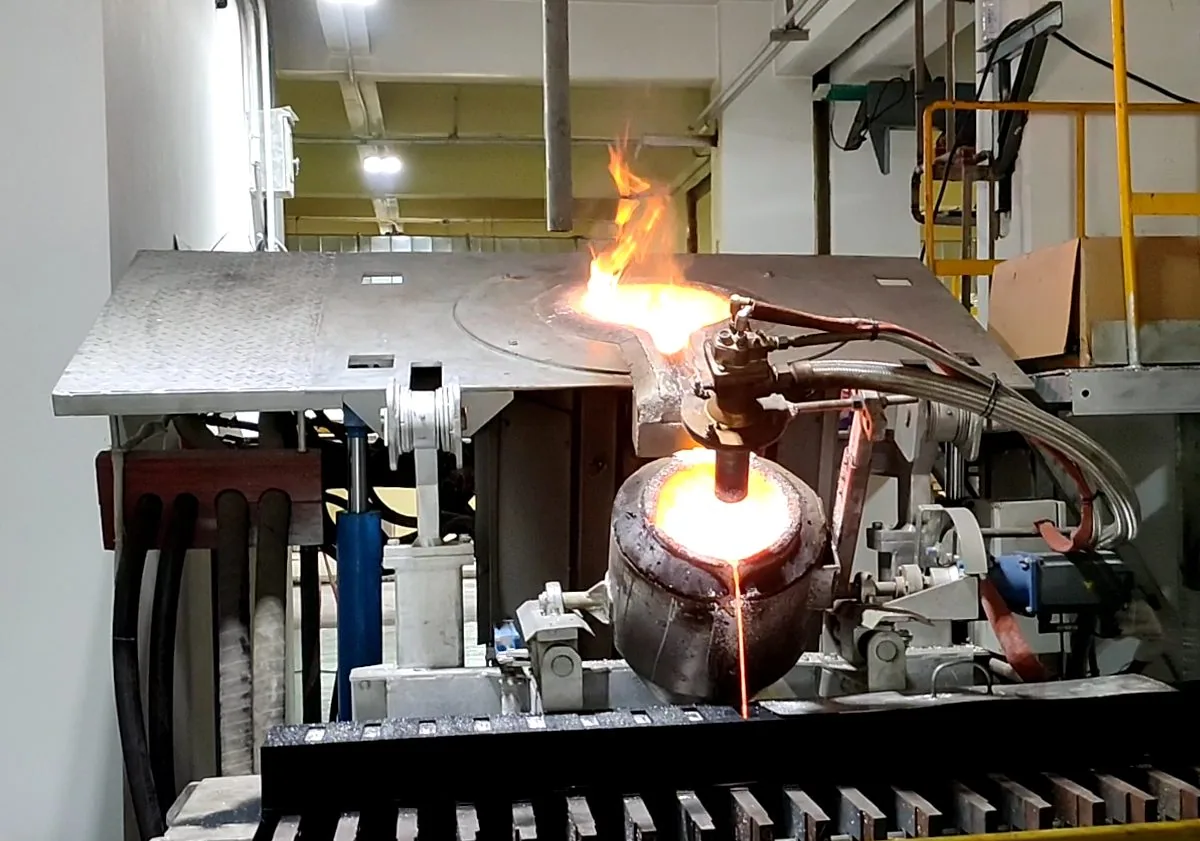
Linear Silver Ingot Casting Machine
For pure silver ingot producers, casting 15 kg ingots: silver powder melting, deoxidation, casting, post-treatment (washing, grinding, marking) and palletising in one line.
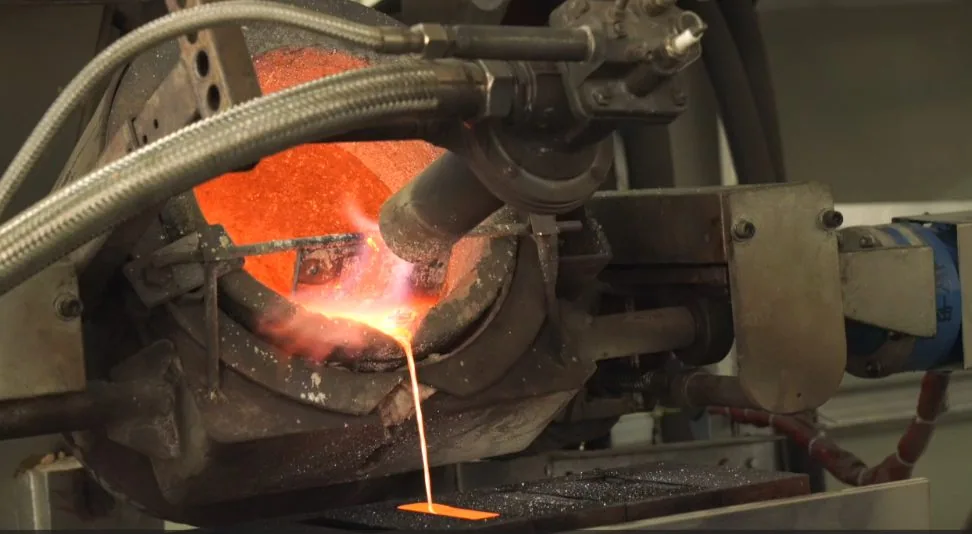
Linear Silver Ingot Casting Machine (15 kg / 30 kg Dual-Purpose)
One machine, two ingot sizes.
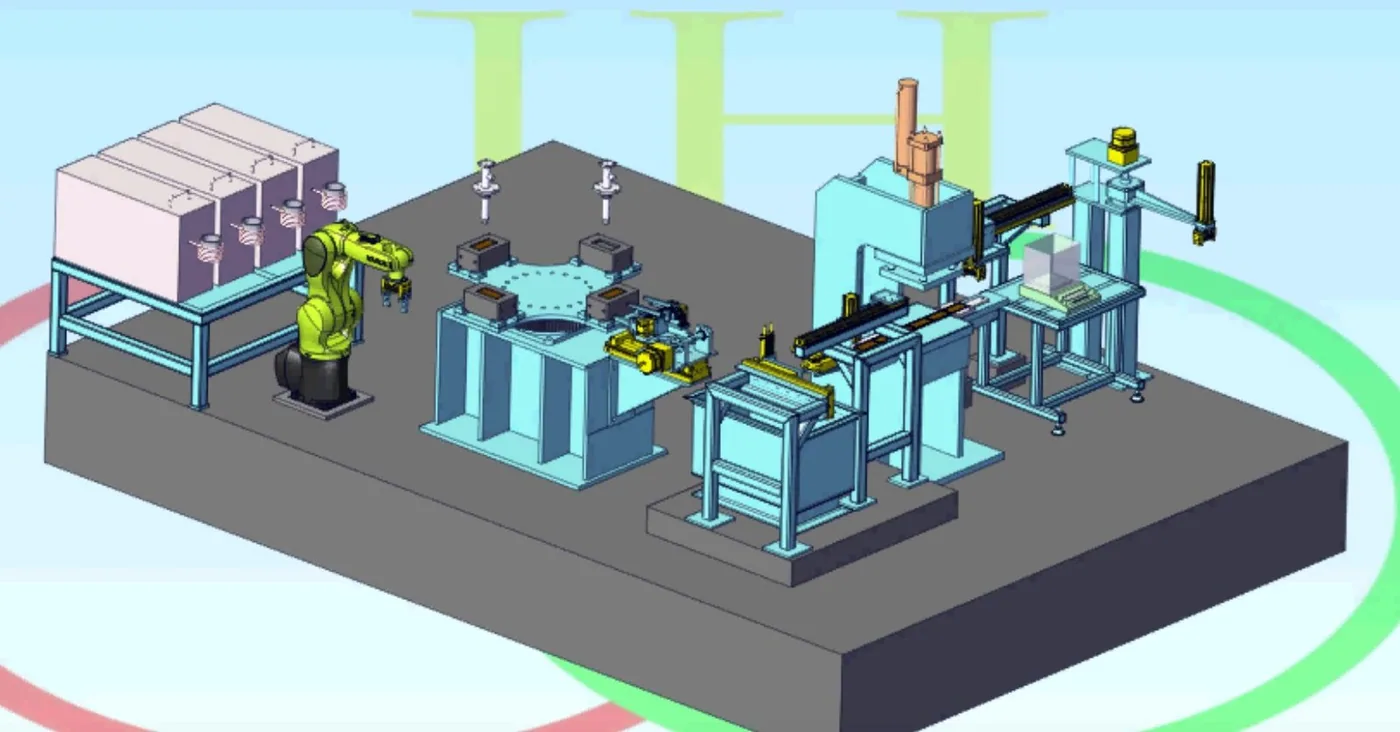
Automatic Gold Ingot Casting Machine
Automated equipment for precious-metal casting, using vacuum or pressure technology for loss-free, oxidation-free ingot forming.
Send us your specification
Tell us the metal, anode or ingot weight, and required output. An engineer will reply within one business day with a configuration and a quotation.