
Retrofitting an Old Casting Machine: Scope and Payback
Scope a copper anode casting machine retrofit: what to keep, when to swap PLC and hydraulics for servo drives, weighing upgrades, safety and downtime.
What Can Be Kept
An anode casting machine that has run for a decade is usually worn in three places and sound everywhere else: the ladle trunnions, the mould cavity edges and the turntable drive. Everything the melt touches is consumable; everything that positions the mould is structure. A retrofit therefore starts by separating those two categories on the machine drawing, then measuring the structure against its original geometry rather than replacing it on age alone.
The keep-or-replace decision usually turns on the mould set. Copper and steel moulds take thermal cycling and crack at the corners, which is why the barium sulphate dry-powder coating system exists. If the existing moulds still hold cavity dimensions after cleaning, they can stay in service through the retrofit and be replaced later, spreading the capital and keeping a spare set available for the first hot trials.
PLC HMI and Servo Replacement
Control is where most retrofits earn their money. An older machine typically runs relay logic, a timer-based pour and a hydraulic power unit with proportional valves. Replacing that with a PLC plus host computer and a fully servo-driven axis set turns a sequence of guessed positions into a repeatable motion profile, and removes the oil, hoses and accumulators that dominate both fire risk and weekend maintenance.
Servo conversion is not only an electrical job. The central dual-servo disc drive needs the turntable bearing and the ring gear to be sound, because the drive can position far more precisely than old mechanics can repeat. If backlash is present it has to be corrected first, otherwise the accuracy the servo offers is spent chasing mechanical slack. Ladle tilt and mould indexing should be re-referenced to absolute encoders so a power interruption does not lose the casting position.
| Scope option | Control change | Capacity reference | Mechanical work |
| Control-only refresh | PLC + host computer | 120 plates/h class | Existing hydraulics kept |
| Servo drive conversion | Fully servo-driven | 120 plates/h class | Turntable re-machined |
| Single-ladle machine | PLC + host computer | 120 plates/h (20–50 t/h) | New turntable and mould set |
| Double-ladle machine | PLC + host computer | 200 plates/h (32–80 t/h) | New turntable, two ladles |
Weighing System Upgrade
The weighing loop is the second area worth touching. Volumetric or timer-based pouring drifts with metal temperature, ladle refractory wear and tundish level; a load-cell quantitative loop corrects every pour against the target anode weight, which on this class of machine spans 160–400 kg. The performance figure for the automatic quantitative casting machines is ±1% on ≥98% of plates, and a retrofit reaches that band only if the ladle mass is measured free of carriage friction and cable drag.
Two practical constraints decide whether the weighing upgrade fits the old frame. The ladle carriage must float on the cells without the tilt mechanism binding against its guides; if it cannot, the cell reads a fraction of the melt and the accuracy figure collapses. The HMI also needs a per-plate weight record so the operator sees drift trends rather than isolated reject events, which is what keeps the ±1% band sustainable across a campaign.
Safety Compliance Gaps
Safety work rarely drives the retrofit decision, but it often decides how long the machine stays running afterwards. Removing the hydraulic power unit eliminates an oil fire hazard near the mould line, yet it also removes the cushioning that hid mechanical faults, so guarding and interlocks must be reviewed against the new, faster motion envelope. A retrofit is the cheapest moment to close that gap, because the cabinet is open and the wiring is being replaced anyway.
Documentation carries equal weight. Old machines often arrive without an as-built schematic, a risk assessment or a record of safety function response times, which makes every later fault an investigation. A retrofit handover should include a revised electrical drawing set, a valve and drive list and a signed test record for each interlock, so the next maintenance intervention starts from a known state instead of from memory.
Downtime Planning
The tie-in is the part of the project that costs production. Panel building, cabinet wiring and weighing calibration should all happen off-line; only cable pulling, mechanical re-machining and hot commissioning need the machine down. A practical sequence is to run the new cabinet alongside the old one, transfer the drives one axis at a time, and keep the old pendant live until the servo axes have been proven on a dummy load that matches anode weight rather than an empty ladle.
| Phase | Location | Production state | Main risk |
| Panel build | Off-line workshop | Machine still casting | Late I/O list |
| Cable pulling | At machine | Shutdown required | Damage to cable trays |
| Axis transfer | At machine | Partial shutdown | Lost reference positions |
| Dry commissioning | At machine | Shutdown | Dummy load not representative |
| Hot commissioning | At machine | Restart ramp | First-plate weight scatter |
| Coating install | At machine | Shutdown | Coating cycle 3–5 s not met |
Adding the barium sulphate dry-powder coating system to the same shutdown is usually cheaper than a separate outage, since the machine is already open for control work. Its 3–5 s coating cycle replaces the manual station and removes the operator from the mould line. The benefit shows up on the first hot plates: correct coating on cracked mould areas reduces back-fin and sticking defects, so commissioning scrap is not confused with genuine weight or control faults.
Payback and Decision Points
Payback is normally built from three lines rather than one. Weight yield comes first: moving from timer-based pouring to a quantitative loop at ±1% on ≥98% of plates cuts the anodes that must be remelted and the spacing faults that follow an overweight plate. Availability comes second, as hydraulic maintenance and mould cracking stops disappear. Capacity comes third, and the ceiling is set before work starts by choosing between a single-ladle and a double-ladle configuration.
The actionable sequence is to measure before specifying: record turntable bearing play, ring gear backlash, mould cavity dimensions and ladle carriage straightness, then decide which of the three subsystems the budget actually reaches. A retrofit specification can borrow its axis layout and weighing logic from a current single-turntable machine, such as the double-ladle quantitative casting machine from ZXSZ, instead of starting from blank paper. Freeze the weight tolerance and the reject rule first; the control, safety and downtime scopes follow from those two numbers.
Related equipment
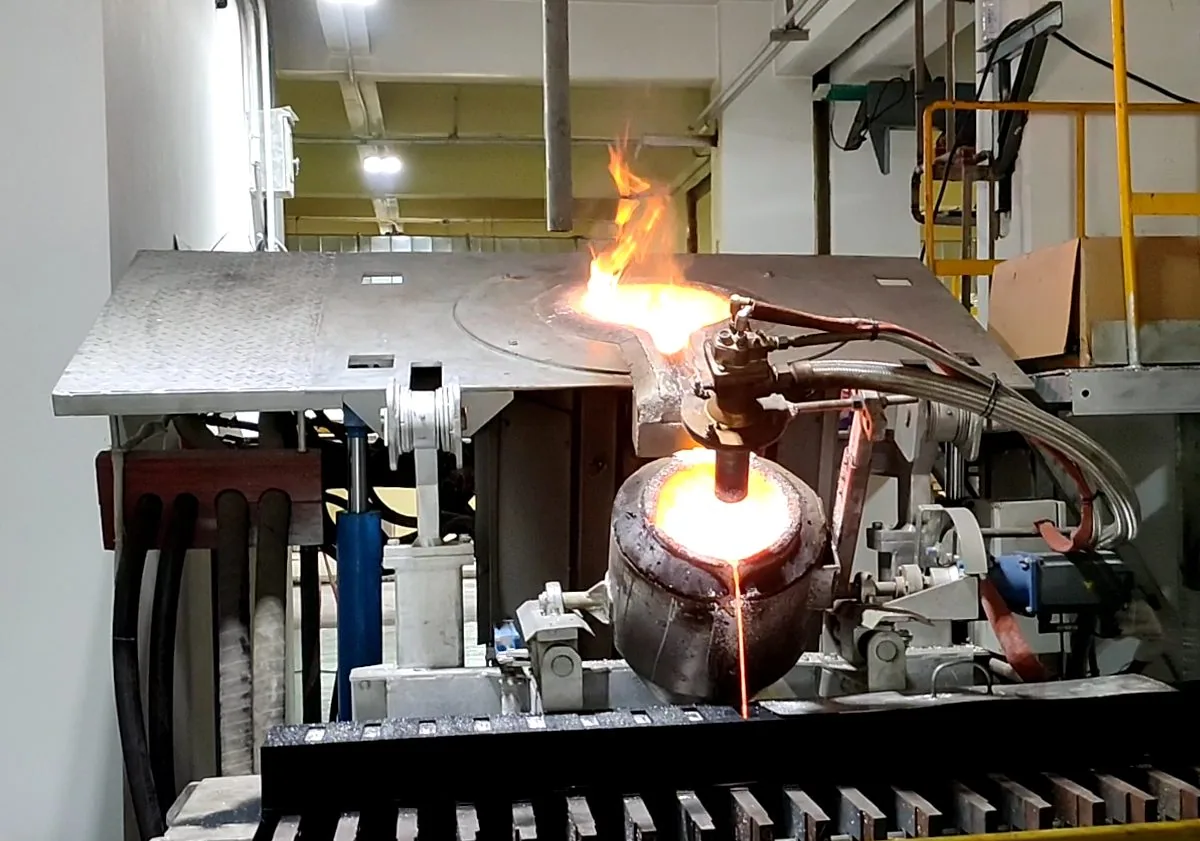
Linear Silver Ingot Casting Machine
For pure silver ingot producers, casting 15 kg ingots: silver powder melting, deoxidation, casting, post-treatment (washing, grinding, marking) and palletising in one line.
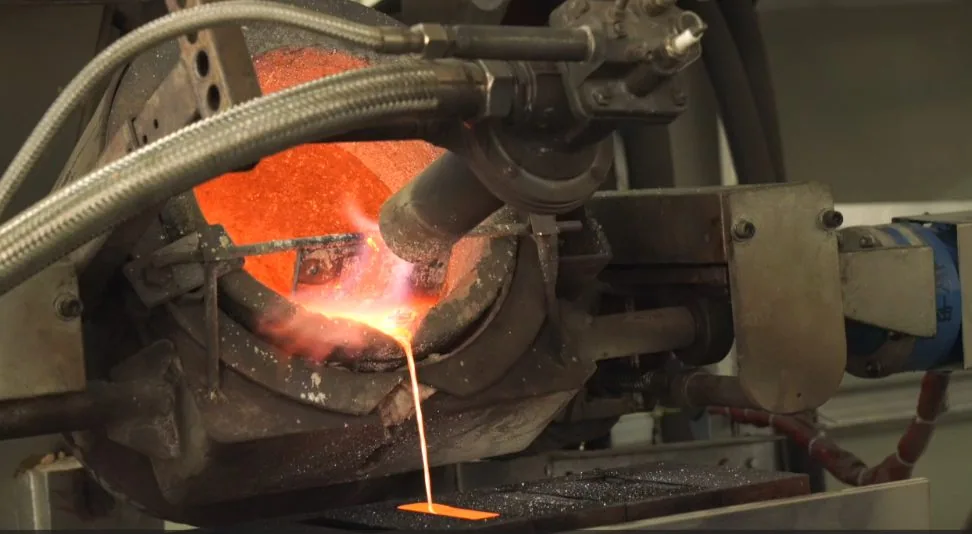
Linear Silver Ingot Casting Machine (15 kg / 30 kg Dual-Purpose)
One machine, two ingot sizes.
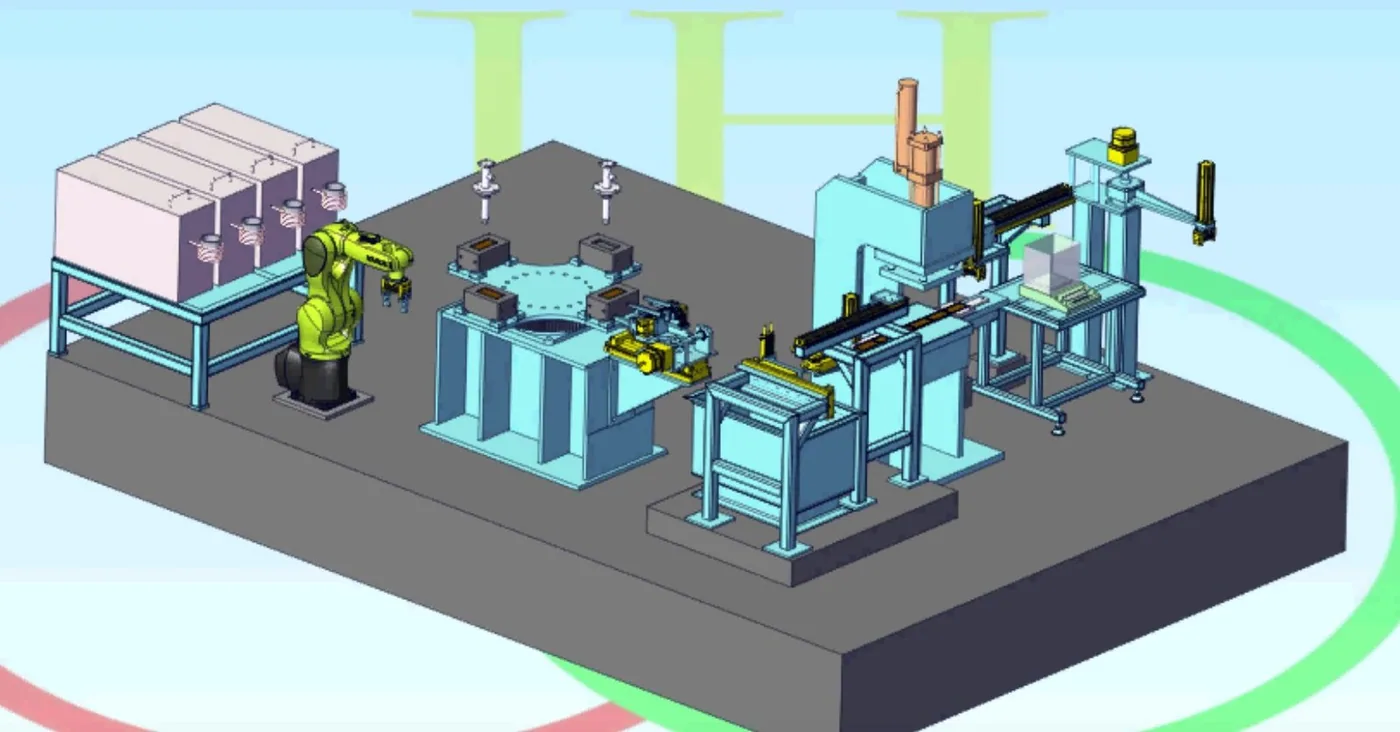
Automatic Gold Ingot Casting Machine
Automated equipment for precious-metal casting, using vacuum or pressure technology for loss-free, oxidation-free ingot forming.
Send us your specification
Tell us the metal, anode or ingot weight, and required output. An engineer will reply within one business day with a configuration and a quotation.