
Silver Ingot Casting Defects and How to Fix Them
Shrinkage cavities, oxide skins, sticking and weight spread trace back to a specific setting. A symptom-to-cause table shows which variable to check first.
Shrinkage Cavity Formation
A shrinkage cavity in a 15 kg silver ingot is a feeding problem rather than a melting problem. Silver contracts as it freezes, so the last volume to solidify must draw liquid metal from a reservoir that is still molten. Fixed-point casting into a vertical mould works because the top of the ingot stays hot while the base sets. When the ladle cuts off too early, or the top face chills before the interior, the pipe closes over and the cavity is sealed inside instead of sitting where it can be cropped.
Two setpoints decide whether feeding succeeds. The first is melt temperature at the moment of pour: too cold and the freezing front advances from the mould wall before the centre has drawn; too hot and gas pickup and mould wear rise. The second is the thermal gradient down the mould. Dual IR and thermocouple measurement holding ±2 °C, as used on the Intelligent Silver Ingot Casting System (Multi-Mould Static Casting Machine), removes guesswork from the first; the second is a matter of mould material and hot-top design.
Surface Oxidation and Inclusions
Silver oxidises readily above its melting point, and the oxide reports in the ingot as a dull skin, internal speckle or re-melt loss. Inert gas protection keeps silver oxidation loss below 0.3% on the Linear Silver Ingot Casting Machine, and argon-protected melting is the stated basis for high-purity silver above 99.99% on the Intelligent Silver Ingot Casting System. The practical checks are gas purity, seal integrity at the crucible head and the point where the stream leaves the ladle: air entrainment there re-oxidises metal that was clean in the furnace.
Inclusion diagnosis usually splits into two families. Exogenous inclusions from crucible lining, mould coating and dross carry-over are dark, angular and sit near the surface; internal oxide from gas pickup is finer and more evenly dispersed. Sectioning one rejected ingot normally shows which family you are dealing with, and therefore whether the fix belongs in the melt or in the transfer path.
Sticking and Mould Release
An ingot that drags in the mould leaves torn edges, cold shuts or a rough face that has to be ground back, costing both weight and appearance. Sticking is almost always thermal or geometric: a mould too cold on the first cast of a shift, a lost draft angle, or a coating worn through at the corners. Pour temperature and dwell time interact here. Longer dwell gives a thicker shell that releases more cleanly, but it also loads the mould and sets up thermal fatigue.
Automation changes the repeatability of release more than the mechanism. A dedicated automatic demoulding mechanism lifts stripping efficiency by 60% with no surface scratches on the Linear Silver Ingot Casting Machine (15 kg / 30 kg Dual-Purpose), because stripping force is applied along the same axis every cycle. On the Vertical Rotary Silver Ingot Casting Machine from ZXSZ, the disc vertical-mould system with 4 stations or more holds moulds to a fixed thermal cycle, and mould change takes 5 minutes or less when a cavity is worn.
Weight Spread Across a Cast
Weight spread is the defect buyers notice first because it is measured at the door. The single-size linear machine specifies 15 ± 1 kg; the multi-mould static system tightens this to 15 ± 0.5 kg and 30 ± 1.0 kg with 0.03% accuracy and 1 g resolution on the weighing step. Spread comes from inconsistent ladle fill, variation in silver powder bulk density between lots, and metal removed during grinding and marking. Only the first is a machine setting; the other two are charge control and finishing discipline.
For a plant casting both 15 kg and 30 kg ingots, the largest single source of spread is often the changeover rather than the pour. Selecting 15 kg or 30 kg on the touch screen, with no mould change and no downtime, removes the re-trimming and first-ingot settling a manual changeover introduces; the stated cycle moves from ≤2 min to ≤3 min per ingot accordingly.
Matching Machine Type to Defect Risk
Four silver ingot lines differ in where they put the operator's attention, which matters when a defect has appeared and you must decide whether to correct practice or change tooling. A single-size machine gives the most stable mould thermal history; a dual-purpose machine trades some of that for changeover flexibility; a rotary machine gives continuous multi-station casting with a 5-minute mould change; a static multi-mould machine trades throughput for tighter weighing and graphite mould quality. Output also differs: 1.5–2 t per 8 h on the linear machines, ≥1.8 t per 8 h on the rotary, 1.0 t and 1.2 t per 8 h on the static system.
| Machine | Size change | Ingot accuracy | 8-hour output |
| Single-size linear | Fixed mould set | 15 ± 1 kg | 1.5–2 t |
| Dual-purpose linear | Touch screen; no mould change | 15 ± 1 kg / 30 ± 1 kg | 1.5–2 t |
| Vertical rotary, 4+ stations | Mould change ≤5 min | 15 kg; within 1 mm | ≥1.8 t |
| Multi-mould static | Interchangeable mould sets | 15 ± 0.5 kg / 30 ± 1.0 kg | 1.0 t / 1.2 t |
Diagnosis Table
Use the following table as first-pass triage, not as a diagnosis. Each row names the variable that most often explains the symptom on silver ingot work, plus the check that confirms it. Change one variable at a time, because altering melt temperature and dwell time together makes the next cast unreadable. Dimensional error within 1 mm and ingot weight inside the stated tolerance are the two acceptance gates that show whether the correction actually worked.
| Symptom | Probable cause | Check first |
| Open pipe on top face | Ladle cut-off too early | Cut-off timing and pour weight |
| Cavity after cropping | Melt too cold at pour | Temperature at the ladle |
| Dull or discoloured skin | Cover gas lost | Argon flow and head seal |
| Dark spots on the face | Dross or coating carry-over | Skim practice and mould coat |
| Ingot torn on stripping | Cold mould or worn coating | Mould temperature and corners |
| Weight drift between ingots | Inconsistent ladle fill | Weighing step at 1 g resolution |
Before altering a recipe, log three numbers per cast: melt temperature at the ladle, dwell time in the mould, and stripped ingot weight at 1 g resolution. A cavity that persists with the pipe open at the top is a cut-off timing problem; one that appears only after cropping is a superheat problem; a weight drift with clean surfaces is a filling problem. That log separates the three without sectioning an ingot.
Related equipment
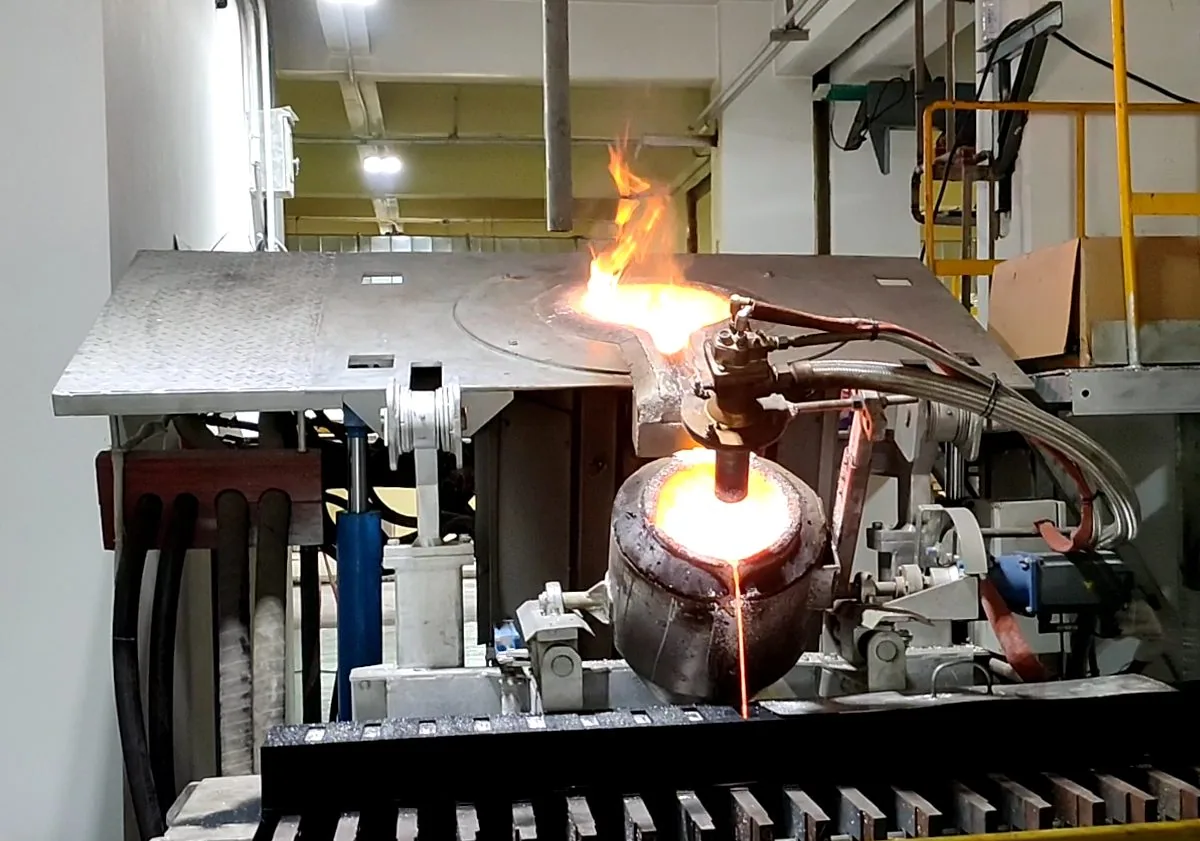
Linear Silver Ingot Casting Machine
For pure silver ingot producers, casting 15 kg ingots: silver powder melting, deoxidation, casting, post-treatment (washing, grinding, marking) and palletising in one line.
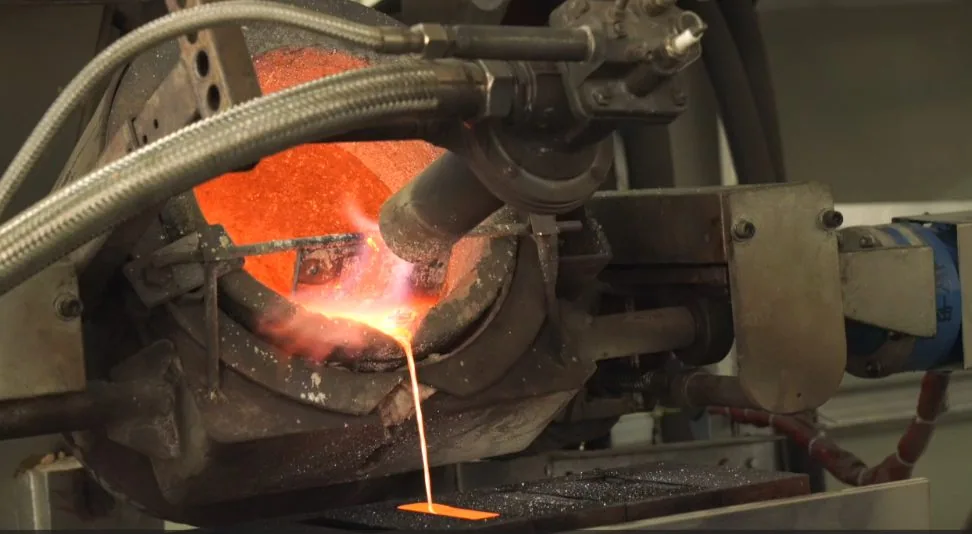
Linear Silver Ingot Casting Machine (15 kg / 30 kg Dual-Purpose)
One machine, two ingot sizes.
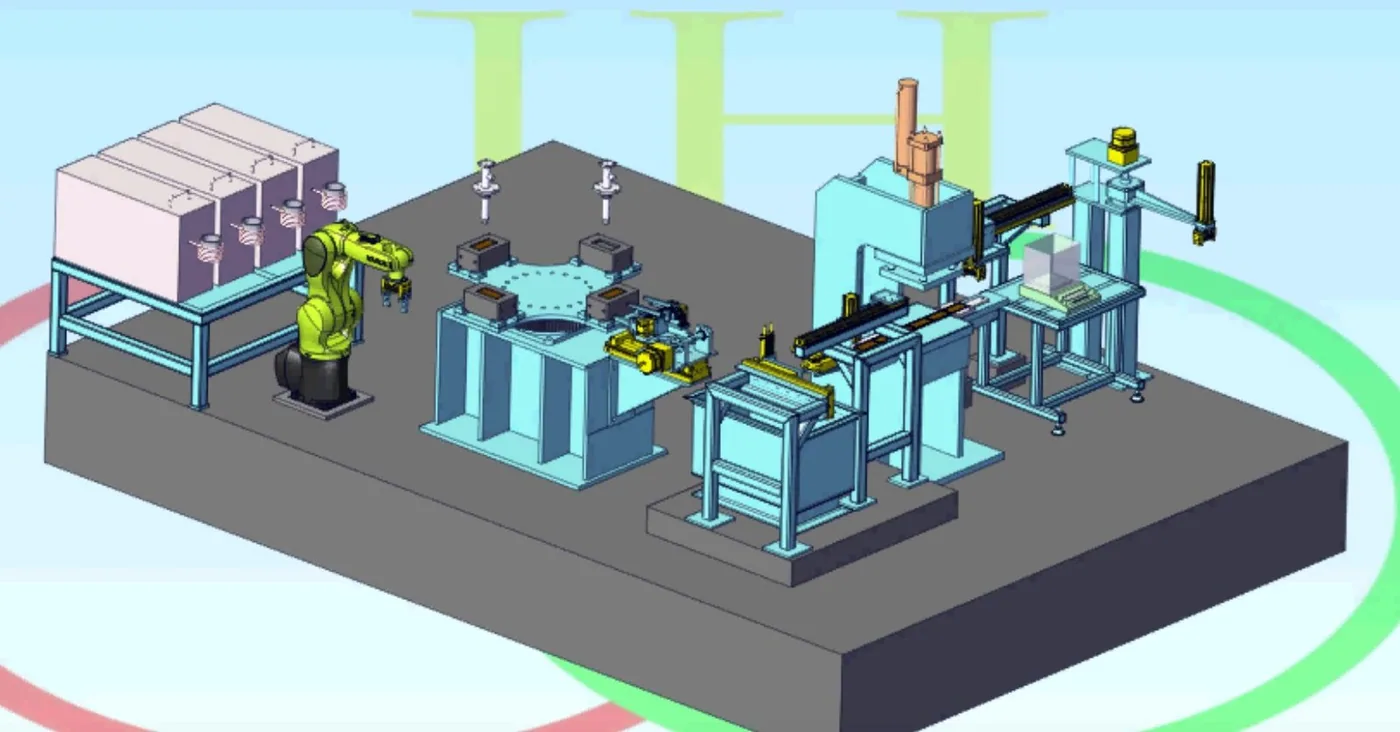
Automatic Gold Ingot Casting Machine
Automated equipment for precious-metal casting, using vacuum or pressure technology for loss-free, oxidation-free ingot forming.
Send us your specification
Tell us the metal, anode or ingot weight, and required output. An engineer will reply within one business day with a configuration and a quotation.