
Spare Parts for Casting Machines: What to Stock
Stock wear parts by failure frequency and lead time, not by price. A part number plus drawing revision is what keeps a ladle or mould change inside one shift
Critical Versus Consumable Spares
The useful split is not price but consequence. A critical spare is a component whose failure stops the turntable before the next scheduled shutdown and cannot be reproduced in the plant workshop. A consumable spare degrades predictably, is replaced during planned maintenance, and shows its condition in the product before it fails. On an automatic quantitative casting machine with a central dual-servo disc drive, the servo drive, PLC rack and ladle tilt encoder belong in the first group; coating nozzles, seals and temperature sensors in the second.
Classifying by cost is the common error. A barium sulphate dry-powder coating nozzle is inexpensive, yet losing it interrupts the automatic mould coating routine that manages mould cracks and extends mould life; the back-fin and sticking defects that follow cost far more than the nozzle. A spare ladle shell can be expensive and still need no on-site duplicate, because a ladle is relined rather than replaced. Ask what the machine does in the next shift without the part, not what the part costs to hold.
| Attribute | Critical spare | Consumable spare |
| Failure effect | Stops the turntable within one shift | Gradual quality drift |
| Stock rule | Hold on site, minimum one | Reorder on a schedule |
| Examples | Servo drive, PLC module, encoder | Coating nozzle, seals, sensors |
| Order trigger | Condition monitoring | Replacement interval or stock level |
| Stockout cost | Lost output for a full shift | Rework and mould damage |
Wear Items Worth Holding
Wear concentrates where hot metal, release agent and mechanical motion meet. Walk the machine from the ladle to the demoulding station and list every surface that is coated, wiped, tilted or indexed. The items below sit on most copper anode shops' first stock list. Add or remove lines according to how many shifts the plant runs, whether a second casting line draws on the same store, and whether the moulds are copper or steel.
Two entries deserve separate treatment. Mould coating consumables are cheap, but their absence suspends crack management within a single shift, so a working quantity belongs beside the machine rather than in a central warehouse. Position encoders on the ladle tilt and turntable index fail rarely, yet their failure leaves the machine unable to pour quantitatively, so one unit per axis belongs in a locked cabinet.
Lead Times Shape Stock Depth
For each part, record the quoted lead time and the time the plant needs to fit it. Stock depth follows from the longer of the two measured against the maintenance window. A part with a long lead time and a short fitting time must be held; a part that can be rebuilt locally inside the window can be held at zero. Custom, non-standard designs override this: only the original builder holds the drawing, so their lead time sets the floor for the list.
Do not assume a distributor holds stock. Servo drives, PLC modules and the host computer interface are configured items rather than catalogue items, and the configuration is usually tied to the machine's software version. Ask the supplier to state in writing whether a part is supplied to the original drawing revision or to a current one, and settle that before the shutdown window is fixed. A part that arrives with the wrong configuration behaves like no part at all.
Interchangeability Across Machine Models
The single-turntable single-ladle, single-turntable double-ladle and double-turntable double-ladle machines share an anode weight range of 160–400 kg, a weight accuracy target of ±1% on ≥98% of plates and a common control architecture, but they do not share all hardware. The ladle circuit is duplicated on the double-ladle machines, and the twin-disc version duplicates the turntable drive. ZXSZ builds all three on the PLC plus host computer platform, which is why control spares overlap more than mechanical ones. A plant running more than one model should map every part to the models it fits before fixing stock levels.
| Machine | Anode weight | Casting capacity | Disc and ladle count |
| Single-turntable, single-ladle | 160–400 kg | 120 plates/h (20–50 t/h) | One disc, one ladle |
| Single-turntable, double-ladle | 160–400 kg | 200 plates/h (32–80 t/h) | One disc, two ladles |
| Double-turntable, double-ladle | 160–400 kg | 260 plates/h (40–110 t/h) | Two discs, two ladles |
Note the selectable modes. Both the single-turntable double-ladle and the double-turntable double-ladle machine can run on one disc with one ladle, so nozzles, tilt encoders and coating hardware must be proven in that mode as well as at full output. A spare validated only at the higher capacity can behave differently when one ladle is idle and the other carries the whole cycle.
How to Specify a Spare Part
A request that says only 'ladle nozzle' will be answered with a question. The field set below closes that loop and is worth making mandatory in the maintenance system, so a storeman can raise an order without calling the process engineer and the builder can quote without a site visit. For a non-standard frame the drawing stays with Ganzhou Jinhuan Casting Equipment Co., Ltd., and these fields are what the quotation is built from.
Building the First Stock List
Start with the parts that stop the turntable, add wear items in the order they appear along the casting cycle, and treat cost last. For a copper anode line the floor is one servo drive per axis, one PLC module of each type in use, a full set of ladle tilt and turntable index encoders, and enough barium sulphate consumable to keep crack management running between deliveries. Review the list after every shutdown: any part borrowed from another line or delayed beyond the window moves up a class.
The rule that follows is a design rule, not a purchasing rule: build the spare-parts register at the same time as the machine order, one line per wear part, each carrying its drawing revision, its fitting time and the mode it was proved in. A part whose specification is settled only after the shutdown has started is not a spare part, whatever it costs and wherever it is stored. Fix the register early and the store stays small.
Related equipment
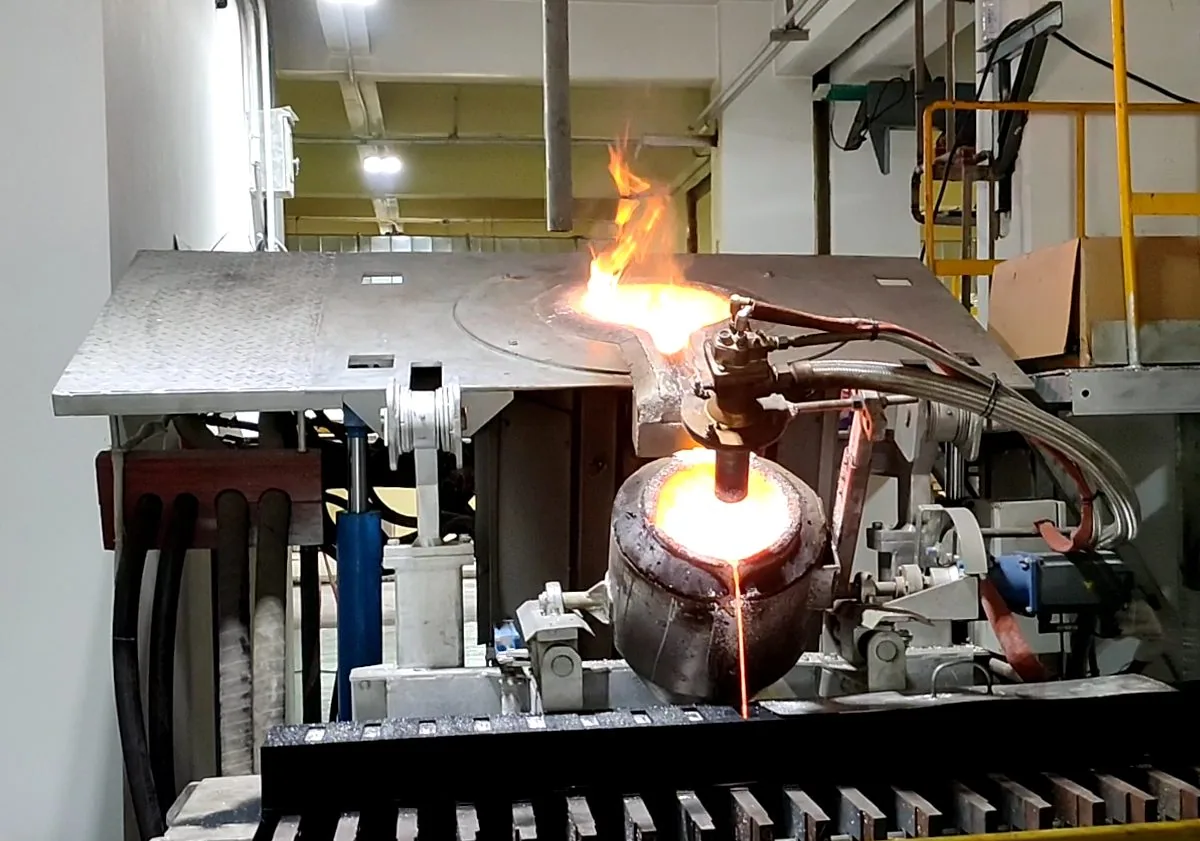
Linear Silver Ingot Casting Machine
For pure silver ingot producers, casting 15 kg ingots: silver powder melting, deoxidation, casting, post-treatment (washing, grinding, marking) and palletising in one line.
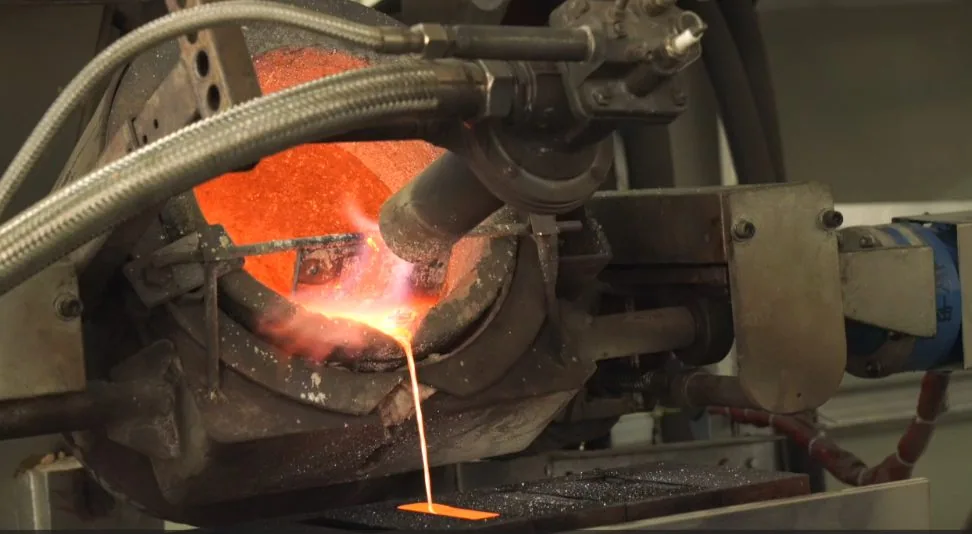
Linear Silver Ingot Casting Machine (15 kg / 30 kg Dual-Purpose)
One machine, two ingot sizes.
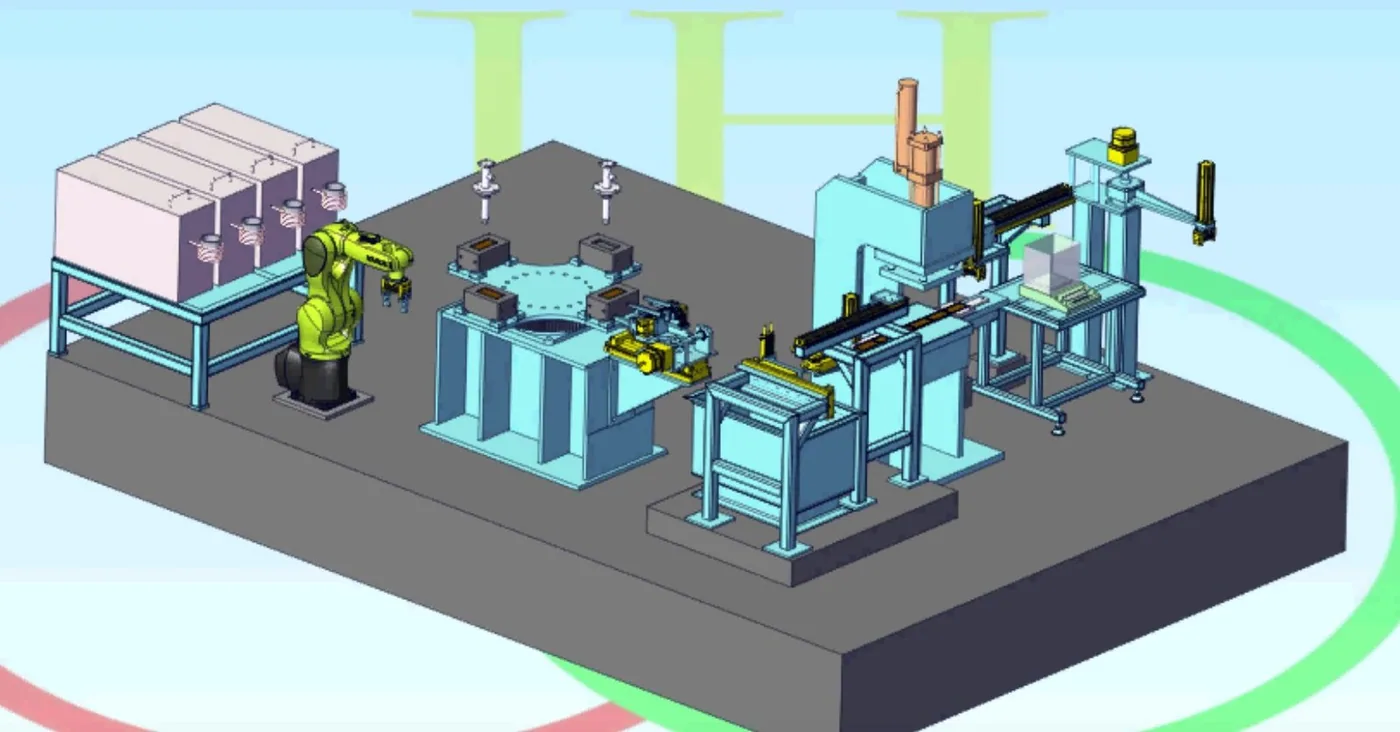
Automatic Gold Ingot Casting Machine
Automated equipment for precious-metal casting, using vacuum or pressure technology for loss-free, oxidation-free ingot forming.
Send us your specification
Tell us the metal, anode or ingot weight, and required output. An engineer will reply within one business day with a configuration and a quotation.