
Tellurium Casting Equipment for Refineries
Tellurium casting succeeds when melt temperature, mould format and dust control are matched to a continuous 1 t/8 h line, not selected as separate items
Tellurium Properties and Handling
Tellurium is a brittle metalloid, so the casting line has to treat the solid ingot as a fragile product rather than a durable billet. In the furnace it is a melt that must be stirred, skimmed and held within a defined temperature window; after demoulding it is a chipped-edge risk during transfer and packing. Dust and fume from the furnace and casting zone therefore need capture at the source. Handling procedures should cover both hot melt and cold, brittle solid, because the failure modes are different.
The equipment set reflects that split between melt handling and solid handling: resistance furnace system, casting system, circulating casting machine, screw feeder, refining degasser, high-temperature pulse bag filter and automatic electrical control system. The furnace side controls chemistry and temperature; the casting side controls fill, solidification and demoulding. The bag filter is not a decorative add-on in this duty, because tellurium-bearing dust is the main housekeeping issue around the casting zone. Assign clear ownership for both sides before commissioning.
Melting and Casting Control
The Linear Tellurium Ingot Casting Machine uses a tilting casting furnace with stirring and skimming functions. Stirring brings suspended impurities to the surface of the melt, where the operator can remove them before casting; skipping the skim transfers the problem downstream into the mould. Temperature control is specified at ±2 °C across the 300–400 °C casting window. That tolerance is the useful control target, not a nominal setpoint. A drifting thermocouple can still show a stable number on screen while the actual melt falls outside the window.
Continuous production is the design intent. A tellurium casting module of some systems delivers a stable output of 1 t/8 h, which changes the labour model: one operator per shift is needed for supervision rather than for every mould. The PLC automatic control minimizes human intervention, but it does not remove the need for a start-up check of stirrer, tilt motion, mould condition and filter draw. Those checks should be written as permissive conditions, not as informal habits.
Ingot Format and Moulds
Moulds and parameters can be adjusted flexibly to produce tellurium ingots of 1–5 kg and other weights and shapes. The standard format in the capacity table is 5±1 kg at 1 t/8 h, so the mould set and take-away device should be sized around that mass first, then checked against any custom format. Do not approve a custom shape from a drawing alone; confirm fill, shrinkage and demoulding on the actual mould geometry. A shape that releases cleanly at one weight may drag at another.
| Parameter | Specified value | Design consequence |
| Nominal output | 1 t/8 h | Sets line balance and buffer |
| Standard ingot | 5±1 kg | Mould and take-away basis |
| Custom ingot | 1–5 kg | Adjustable mould required |
| Casting temperature | 300–400 °C | Defines melt control window |
| Control tolerance | ±2 °C | Verifies heater and sensor |
| Supervision | One operator per shift | Alarm grouping matters |
| Exhaust | High-temperature pulse bag filter | Dust capture at source |
The table is a starting specification, not a purchase datasheet. If the refinery requires a different ingot mass, keep the 1–5 kg range as the boundary for mould and parameter changes and re-check the take-away conveyor, weighing station and packing station. The 5±1 kg standard ingot is the simplest format to qualify because the mould, cooling and demoulding settings can be fixed and then audited. Custom shapes should be released only after a trial cast at the upper and lower mass limits.
Purity Protection
Purity protection begins at the furnace, not at the final packing table. The refining degasser and high-temperature pulse bag filter address different contamination paths: the degasser conditions the melt, while the bag filter contains dust generated at the furnace and casting zone. Stirring and skimming are the primary tools for removing suspended impurities that have floated to the melt surface. If the skim is delayed, those impurities can be carried into the casting system and trapped in the ingot.
Dust control also protects the operator and the electrical cabinet. The automatic electrical control system should interlock the furnace and casting sequence with filter operation, so a stopped fan cannot be masked by a still-running PLC sequence. For the melt itself, avoid unnecessary holding time at temperature; every extra minute at the 300–400 °C window is a chance for surface oxidation and dross formation. The correct aim is stable, short exposure, not a longer soak at a nominal setpoint.
Line Integration
The line integrates as a chain: resistance furnace system, refining degasser, casting system, circulating casting machine, demoulding, and take-away. The 1 t/8 h casting module is the capacity anchor, but the upstream melt supply and downstream ingot handling must be able to absorb its rhythm. A fast furnace with a slow take-away simply moves the bottleneck to the demoulding station. Conversely, an oversized conveyor does not fix a casting system that is waiting for skimmed melt.
The screw feeder and circulating casting machine need clear permissive signals in the PLC. Feed rate should follow actual melt demand; starvation shows up as temperature droop at the tundish, while overfeeding can swamp the casting system and force unnecessary skimming. The circulating casting machine should not index until the mould is confirmed empty, clean and at the correct position. These are simple interlocks, but they decide whether one operator per shift can supervise the line without chasing alarms.
Design Takeaway
For design review, fix three items before layout: the 5±1 kg standard ingot as the qualification format, the ±2 °C control tolerance as a measurable acceptance test, and the 1 t/8 h module as the line balance basis. Then test custom 1–5 kg formats at both mass limits. If any of those three moves during detailed design, revisit the mould set, take-away conveyor and dust-capture capacity together rather than adjusting one item in isolation.
Related equipment
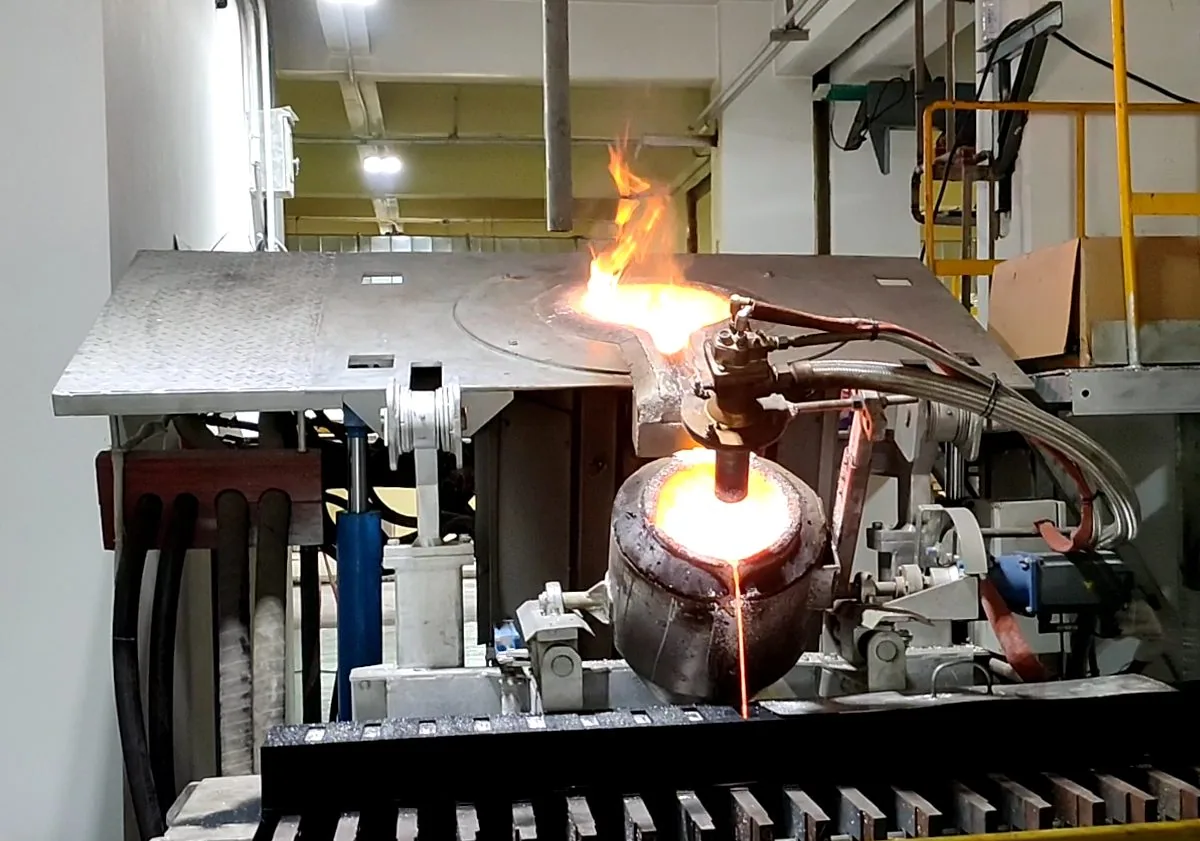
Linear Silver Ingot Casting Machine
For pure silver ingot producers, casting 15 kg ingots: silver powder melting, deoxidation, casting, post-treatment (washing, grinding, marking) and palletising in one line.
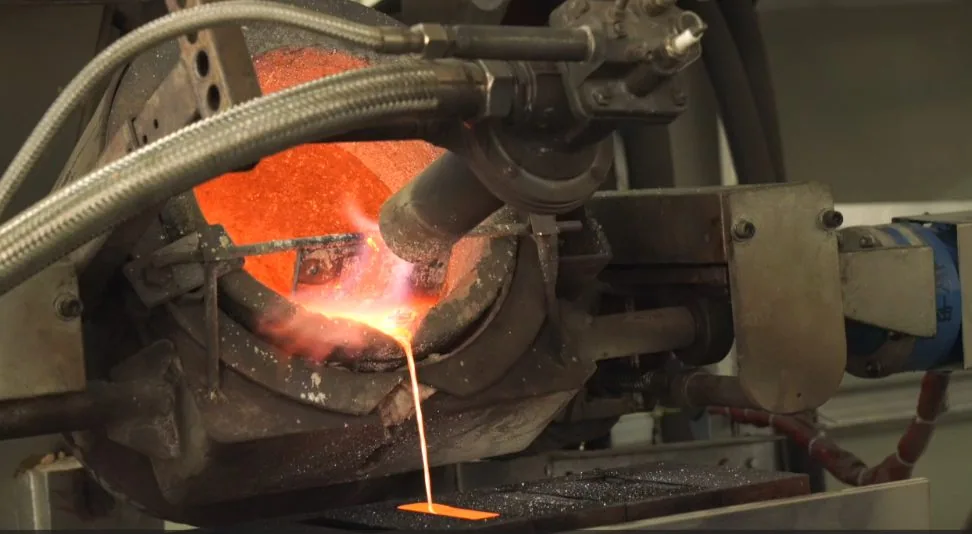
Linear Silver Ingot Casting Machine (15 kg / 30 kg Dual-Purpose)
One machine, two ingot sizes.
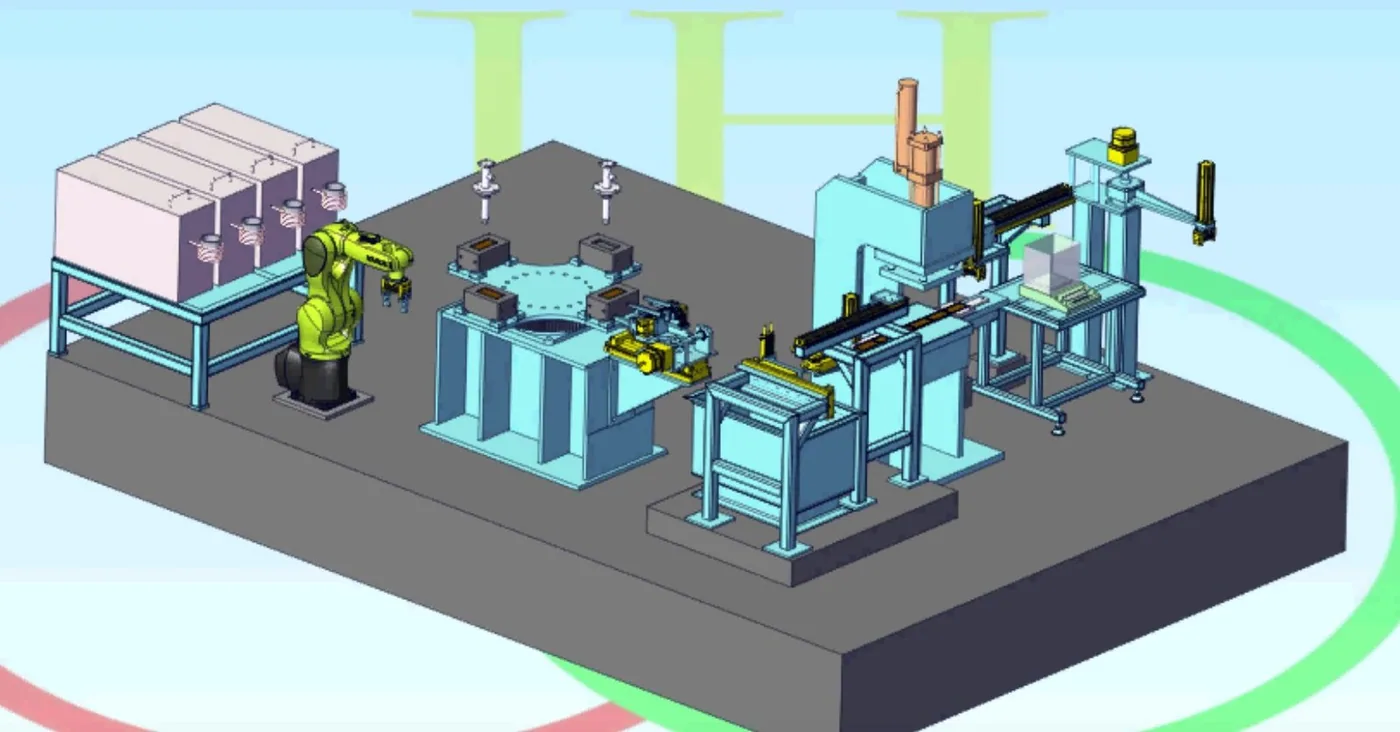
Automatic Gold Ingot Casting Machine
Automated equipment for precious-metal casting, using vacuum or pressure technology for loss-free, oxidation-free ingot forming.
Send us your specification
Tell us the metal, anode or ingot weight, and required output. An engineer will reply within one business day with a configuration and a quotation.