
Tin Ingot Casting Machine: What Buyers Should Know
Tin ingot quality is set by mould draft, cooling and handling, not by the ladle; fix the weight band, mould count and inspection rule before ordering
Ingot Sizes and Weight Control
The Tin Ingot Casting Machine is built around one nominal ingot weight, and the documented configuration is 25 ± 1.5 kg. That band is an acceptance window, not a nominal figure with slack on both sides: the quantitative filling system and the mould cavity are cut so that consecutive ingots land inside it without an operator trimming each one. Buyers who need a different unit weight should raise it at inquiry, because the cavity, the ladle volume and the take-away gripper are all made for a single weight.
Weight drift on tin usually comes from handling rather than from pouring. Tin is soft, and an ingot dropped into a bin instead of placed loses a corner; over a shift the batch mean slides toward the low edge of the band. That is why demoulding, post-treatment and palletising run as one automated sequence — the fewer times the ingot is touched by hand, the more of the ± 1.5 kg band remains usable at the weigh station.
Mould Design for Tin
The cavity decides both release and appearance. Draft is cut generous enough that the ingot leaves under automatic demoulding without a stripper mark on the face that faces outward in the strapped bundle, and the parting line is placed on an edge rather than across a broad face. Cooling is arranged so the skin sets before the mould opens; a mould that is still wet at the next pour leaves laps and a rough top face. Coating, venting and cavity finish are specified per mould geometry, not taken from a catalogue.
Cycle Time and Rated Capacity
Capacity is quoted as up to 5 t/h, equivalent to 200 ingots/h at the 25 kg unit weight. Read that as the rate at which the pour station, the cooling arc, demoulding and post-treatment are balanced, not as the speed of the ladle alone. The interval between pours follows from spreading the hourly ingot rate across the moulds carried on the turntable, so a table with more moulds gives each cavity longer to solidify without reducing output.
The balance rests on pour time, solidification time and demoulding time. Pour time is fixed by ladle volume and metal flow, solidification time by mould cooling and ingot section, demoulding and transfer by the automation package. Whichever is longest becomes the constraint on the whole line. If solidification dominates, add moulds or cooling rather than pouring faster; a faster pour on tin produces cold shuts and a heavier oxide skin that post-treatment then has to remove.
Mechanical casting removes the manual ladle from the loop, but it does not remove the operator from the line. Someone still has to watch the pour stream, clear a sticking ingot and read the weigh station. Design the aisle and the access platform around those tasks, and keep the turntable guard interlocked so that clearing a jam does not mean defeating a switch.
| Parameter | Documented value |
| Ingot weight | 25 ± 1.5 kg |
| Rated capacity | up to 5 t/h |
| Ingot rate | 200 ingots/h |
| Ladling | Mechanical, no manual ladling |
| Demoulding and post-treatment | Fully automated |
Surface Quality and Appearance
A clean appearance means a defined set of defects is absent: flash at the parting line, a cold shut on the top face, an oxide fold dragged in by the pour, and water staining from the cooling circuit. Only flash is really a machine property, and it follows mould wear at the parting line rather than frame design, so it is controlled by maintenance intervals. The rest are process outcomes set by pour temperature, pour rate and launder condition, which is why the casting recipe usually needs tuning during commissioning.
Inspection should be defined before the machine is ordered. A practical regime is a visual check on every ingot for flash and cold shuts, a sample weighment against the 25 ± 1.5 kg band each shift, and a stack check on the finished bundle. Tin marks under its own weight, so stacking height and pallet practice belong in the same specification as the casting machine; an ingot that leaves the line clean can still reach the remelt furnace looking second-hand.
Options and Configuration
The base machine already automates demoulding and post-treatment, so the remaining choices are about how far the automation reaches downstream of the mould and how the line responds when the product changes. Each item below is a fork in the specification rather than a refinement, and each moves the layout, the guarding or the electrical scope. ZXSZ supplies the Tin Ingot Casting Machine as a complete line, so the weight band and the packing interface are argued in one specification rather than split across separate suppliers.
| Option | What it changes | Specify when |
| Second mould set | Cavity, ladle volume and gripper | Product mix needs another unit weight |
| Automatic palletising | Ends manual stacking after demoulding | Packing labour is the constraint |
| In-line checkweighing | Flags drift from the ± 1.5 kg band | Customers audit ingot weight |
| Extended cooling arc | Longer solidification time per mould | Ingot section is heavier than standard |
| Higher guarding class | Access control around the turntable | Plant safety review requires it |
Points to Fix Before Ordering
The most useful decision a designer can take early is to fix the ingot weight and the mould count together, then size cooling to the solidification time that weight implies. Write the acceptance band — 25 ± 1.5 kg for the standard ingot — and the inspection method into the same document as the 5 t/h capacity figure. A machine accepted on capacity alone leaves no contractual basis for rejecting a batch that is fast but out of band.
Related equipment
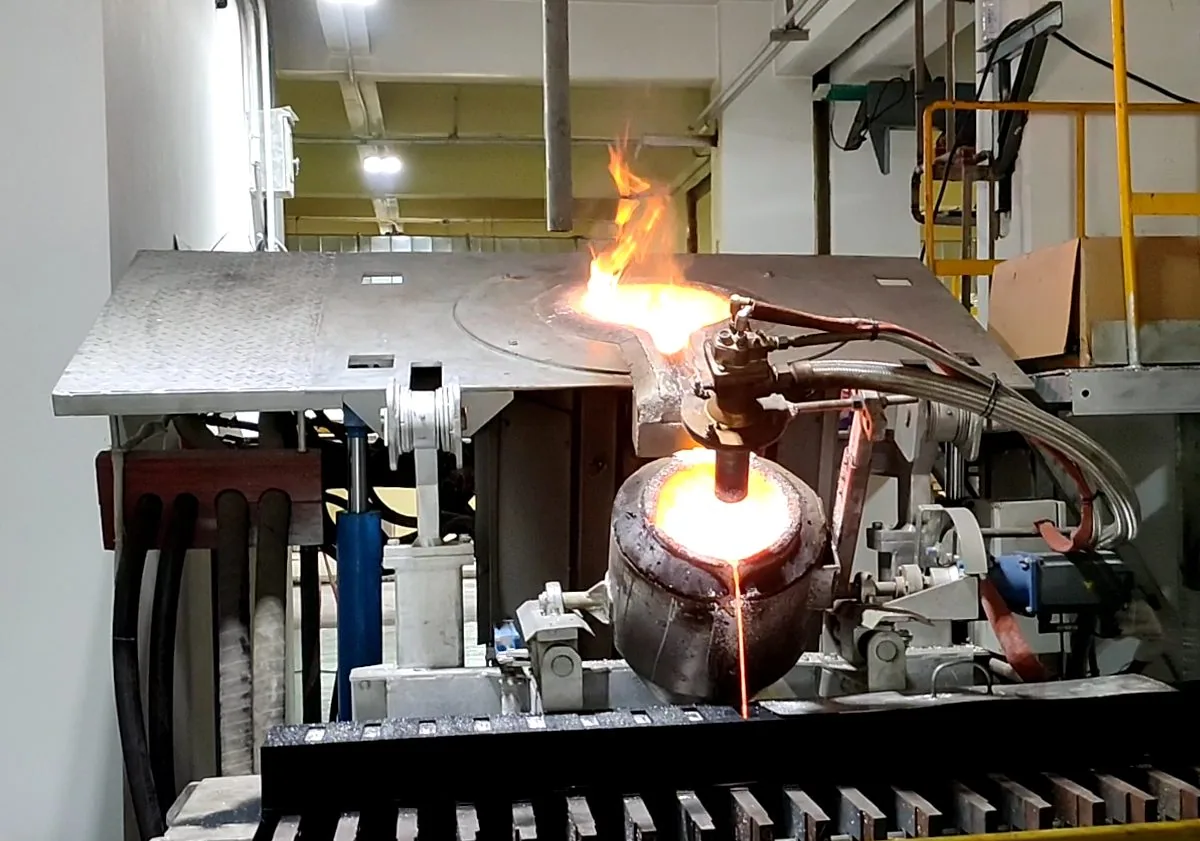
Linear Silver Ingot Casting Machine
For pure silver ingot producers, casting 15 kg ingots: silver powder melting, deoxidation, casting, post-treatment (washing, grinding, marking) and palletising in one line.
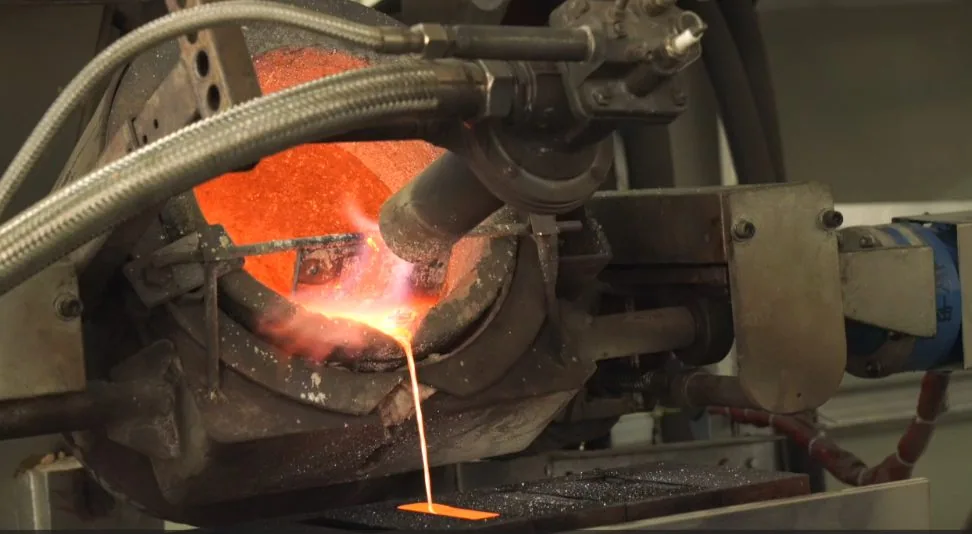
Linear Silver Ingot Casting Machine (15 kg / 30 kg Dual-Purpose)
One machine, two ingot sizes.
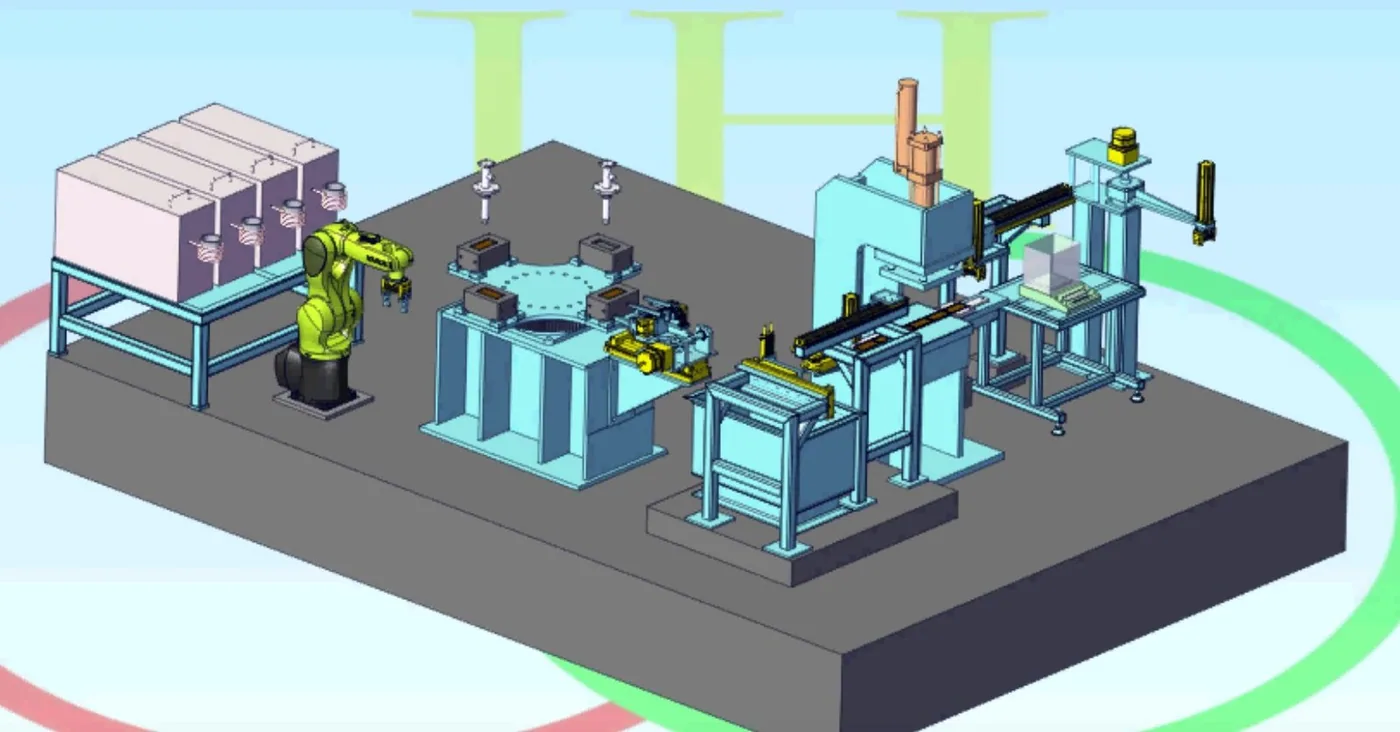
Automatic Gold Ingot Casting Machine
Automated equipment for precious-metal casting, using vacuum or pressure technology for loss-free, oxidation-free ingot forming.
Send us your specification
Tell us the metal, anode or ingot weight, and required output. An engineer will reply within one business day with a configuration and a quotation.