
Single or Double Turntable? Four Copper Casting Machine Configurations Compared
Single turntable with one or two ladles, double turntable with two or four — capacities from 120 to 400 plates per hour. How to pick the right copper casting configuration.
ZXSZ copper anode casting machines come in four standard configurations: single-turntable with one ladle, single-turntable with two ladles, double-turntable with two ladles, and double-turntable with four ladles. All four cast the same 160–400 kg anode to ±1% weight accuracy on ≥98% of plates, and all four share the same technology package — fully servo-driven, hydraulic-free, central dual-servo disc drive, automatic mould temperature control, PLC and host computer control. What differs is throughput, footprint, and how fast your furnaces must deliver melt.
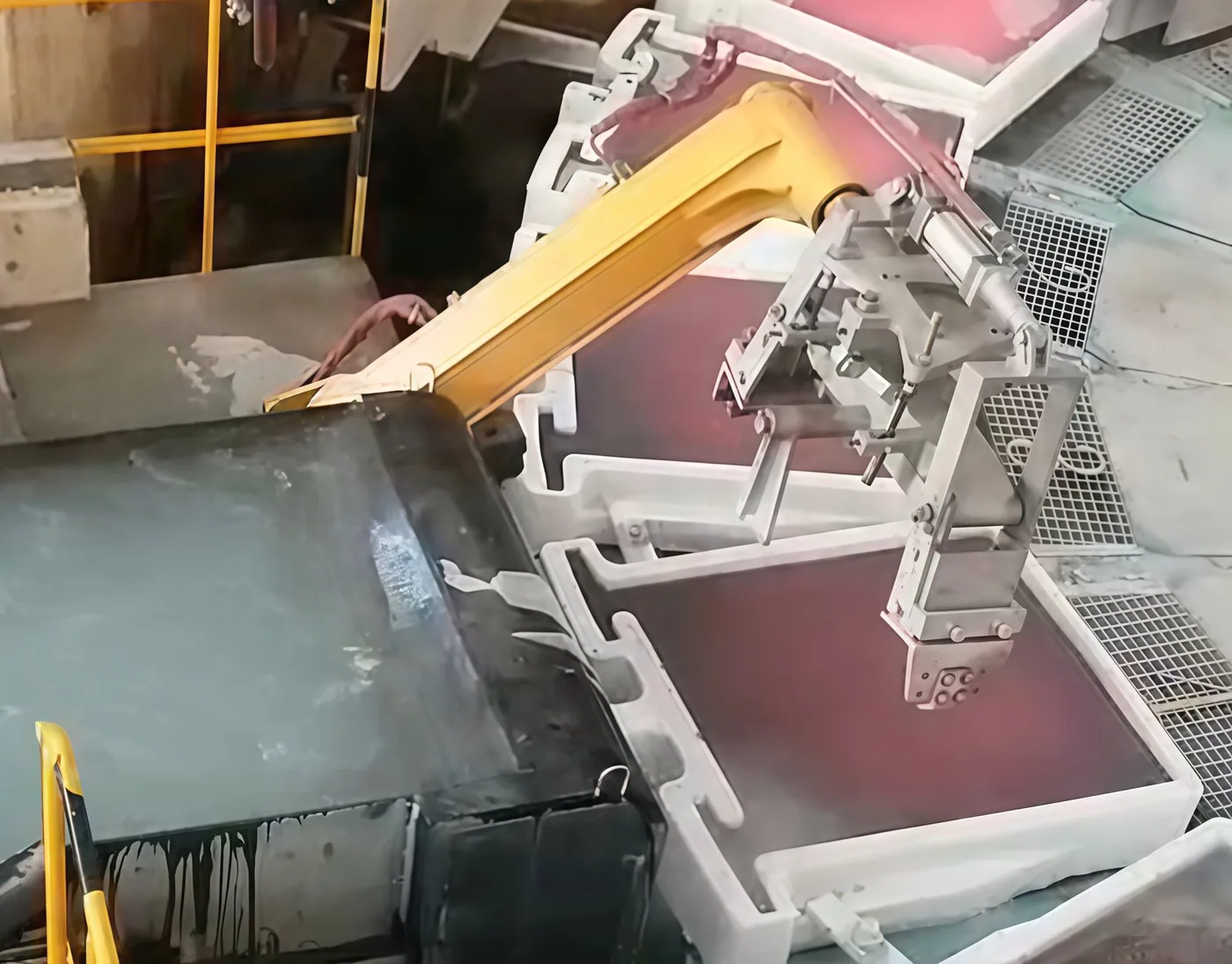
The four configurations at a glance
| Configuration | Casting capacity | Anode weight | Control | Drive |
| Single turntable, single ladle | 120 plates/h (20–50 t/h) | 160–400 kg | PLC + host computer | Fully servo-driven |
| Single turntable, double ladle | 200 plates/h (32–80 t/h) | 160–400 kg | PLC + host computer | Fully servo-driven |
| Double turntable, double ladle | 260 plates/h (40–110 t/h) | 160–400 kg | PLC + host computer | Fully servo-driven |
| Double turntable, four ladles | 400 plates/h (64–160 t/h) | 160–400 kg | PLC + host computer | Fully servo-driven |
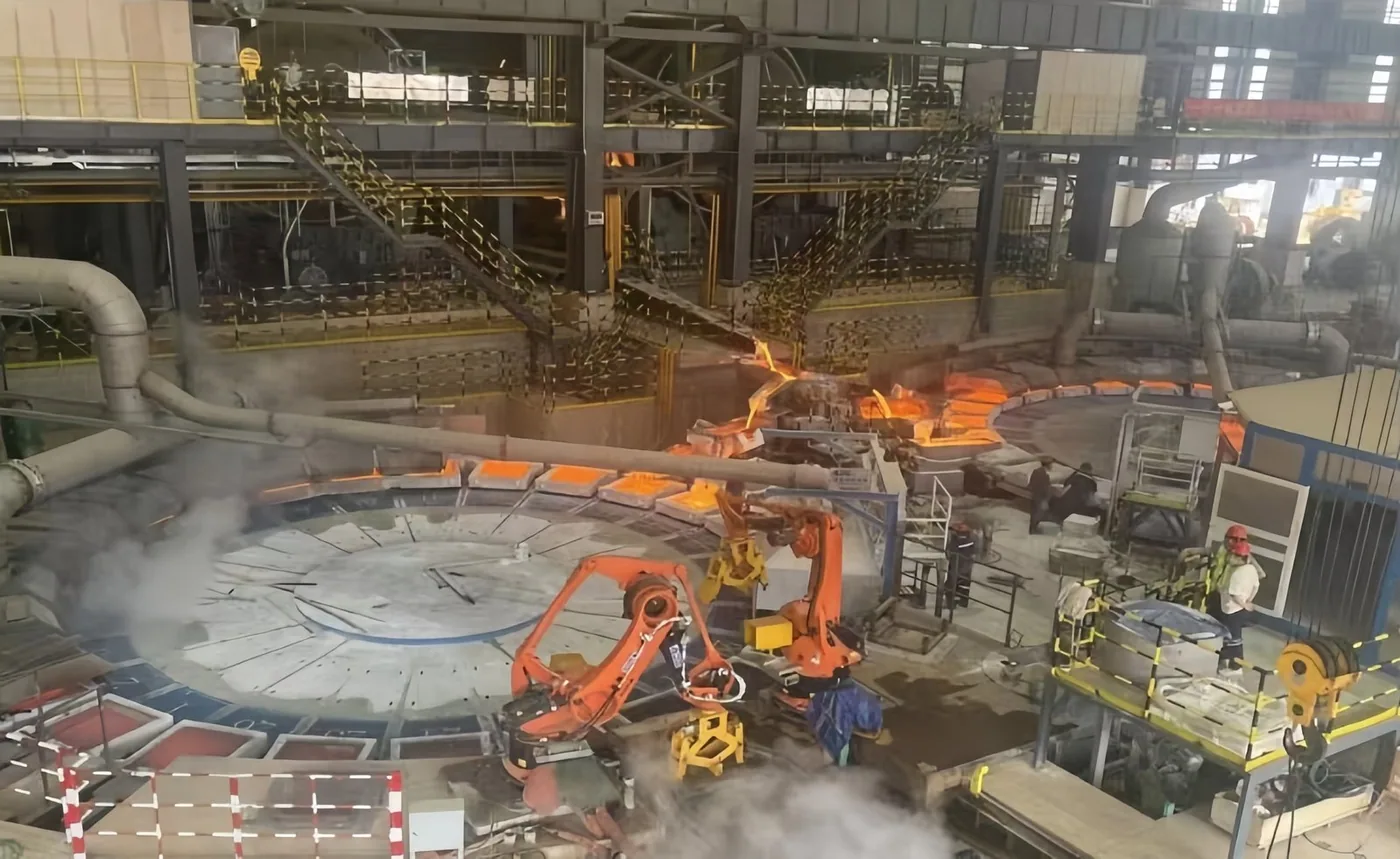
How capacity is calculated
Capacity is arithmetic: tonnes per hour = plates per hour × plate weight. The rated bands follow directly from it — 120 plates/h across a 160–400 kg plate gives the 20–50 t/h band, and 400 plates/h gives 64–160 t/h. Work it both ways: divide your target tonnage by plate weight to get the plate rate you must hold, then check which configuration clears that rate with margin for melt delays, ladle changes and the occasional rejected plate.
Worked examples: 120 plates/h at 380 kg is about 45.6 t/h; 260 plates/h at 370 kg is about 96 t/h; 400 plates/h at 350 kg is 140 t/h. If your target sits between two configurations, take the larger one only when the melt supply can feed it — a machine starved of metal just converts the capacity figure into idle time.
What each configuration is for
Single turntable, single ladle is the compact entry point: the smallest footprint and lowest investment, one furnace feeding one ladle at 120 plates/h, suited to a smelter casting 20–50 t/h. Delivered examples include the 16-mould machine for Baiyin Nonferrous Group, the 18-mould centre-driven machine for Shandong Tianyuan Copper, and the 20-mould centre-driven machine for Ningbo Jintian Smelting.
Single turntable, double ladle keeps the same disc and adds a second pouring position, lifting the frame to 200 plates/h (32–80 t/h) when floor space will only stretch to one disc. This is the configuration behind the 26-mould single-disc double-ladle machines delivered to Dongying Lufang Metal Materials and Dongying Fangyuan, and behind Tongling Nonferrous Jinlong's retrofit of a 28-mould single-disc double-ladle machine.
Double turntable, double ladle puts two discs in parallel for 260 plates/h (40–110 t/h) — the workhorse tier of the range. It is the configuration most often on our reference list: 18-mould double-disc machines for Chifeng Jinjian Copper, Bayan Nur Feishang Copper and Jinchuan Group, 20-mould double-disc machines for Guangxi Nanguo Copper, Shandong Jinxin and Shandong Fangyuan, and 16-mould double-disc machines for Xinjiang Wuxin Copper, Guangdong Qingyuan Yunnan Copper and Daye Nonferrous Jinsheng.
Double turntable, four ladles is the top tier at 400 plates/h (64–160 t/h), for the largest smelters where a single melt stream must be poured continuously into four positions. It demands the most from the refining cycle: only order it when your furnaces can sustain four ladles without the disc waiting for metal.
How to choose
Turntable and ladle count answer "how much per hour"; mould count answers "how heavy a plate and how long to cool". Both questions are covered in choosing mould count by anode weight. For the rest of the line, see casting line plant layout and casting line commissioning checklist; for an existing machine, retrofitting an old casting machine. Tell us your plate weight and target tonnage — we will size the configuration.
Related equipment
Single-Turntable, Single-Ladle Automatic Quantitative Casting Machine
Fully automatic quantitative casting of copper anodes to the required weight and physical dimensions.
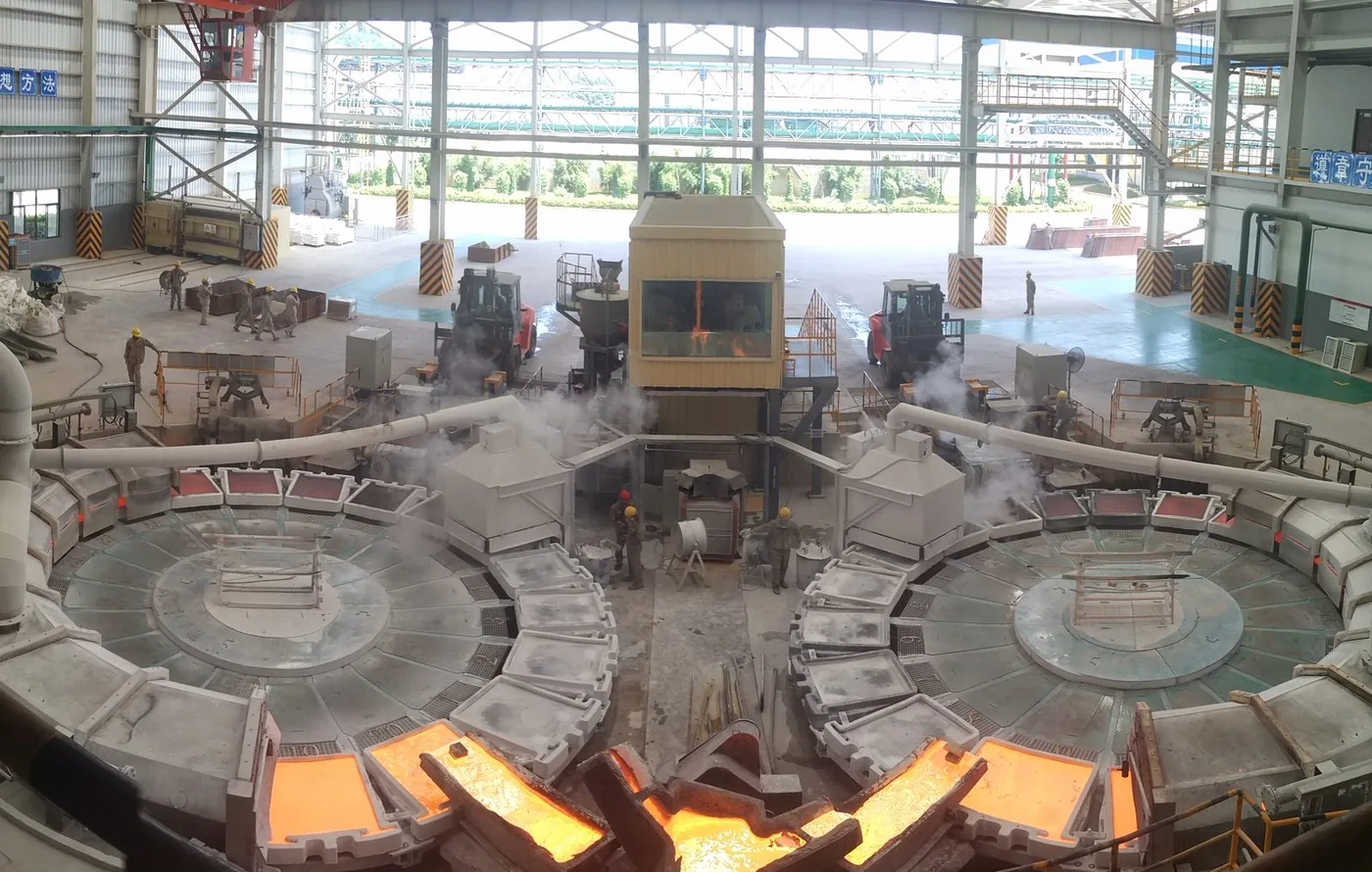
Double-Turntable, Double-Ladle Automatic Quantitative Casting Machine
Fully automatic quantitative casting of copper anodes to the required weight and physical dimensions, using a twin-disc two-ladle arrangement for medium-to-high output.
Double-Turntable, Four-Ladle Automatic Quantitative Casting Machine
Fully automatic quantitative casting of copper anodes to the required weight and physical dimensions, using a twin-disc four-ladle arrangement for the highest output.
Send us your specification
Tell us the metal, anode or ingot weight, and required output. An engineer will reply within one business day with a configuration and a quotation.