
Copper Disc Casting Machine: Choosing Mould Count by Anode Weight
16, 18, 20, 22, 24 or 26 moulds? Mould count follows anode weight and required output. How to size a copper disc casting machine from the plate you must cast.
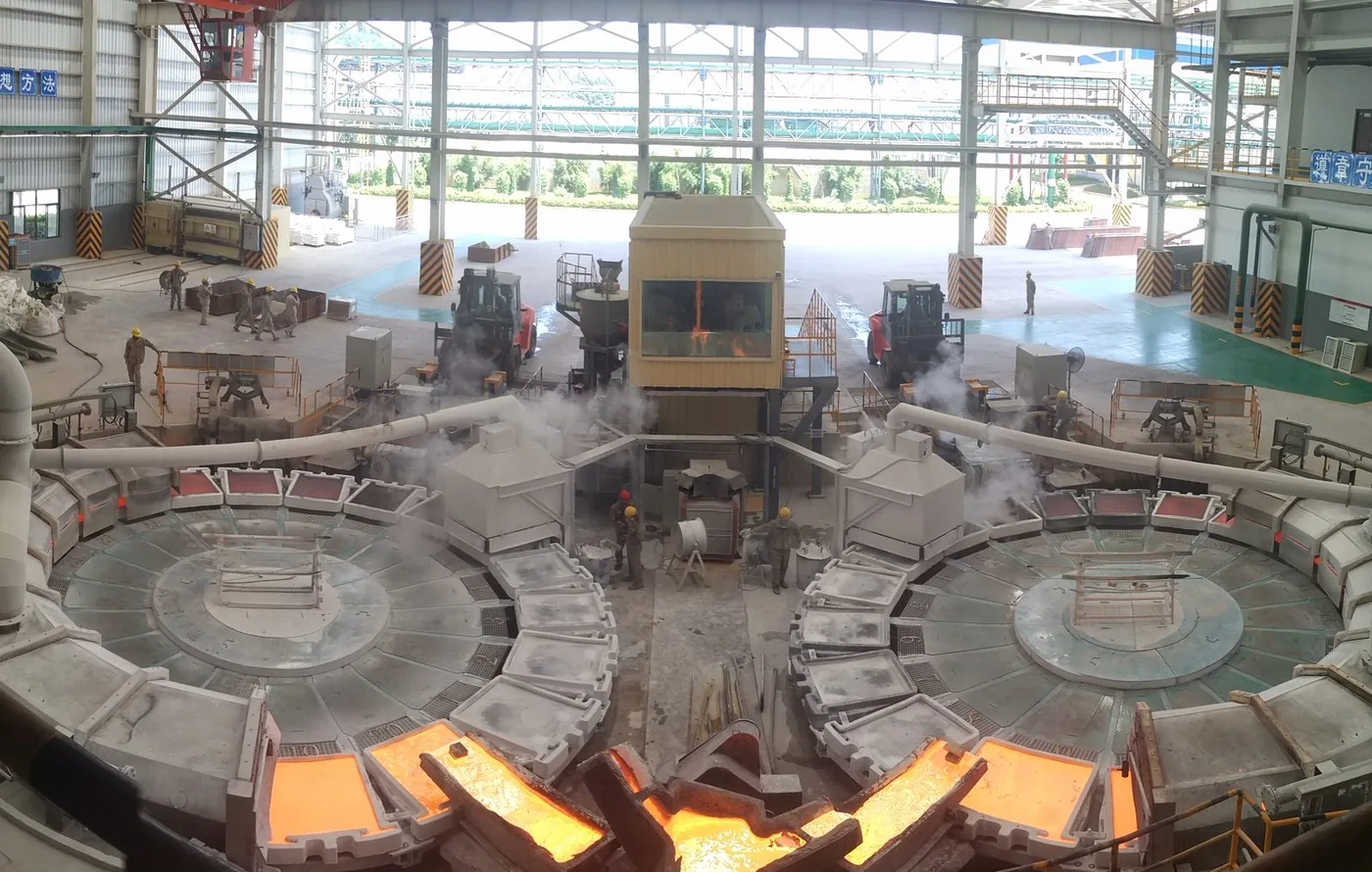
ZXSZ copper disc casting machines are supplied with 16, 18, 20, 22, 24 or 26 moulds, on single- or double-turntable frames with one to four casting ladles. Mould count is the first number to fix on a project, because it sets the disc diameter, the dwell time every plate gets to solidify and cool, and therefore the anode weight you can cast at your target rate. This guide works the decision from plate weight to mould count, using machines we have actually delivered.
Step 1 — Fix the anode weight
The anode weight is set by your electrolysis tank house, not by the casting machine: plate dimensions, hanging arrangement and current density decide it before any equipment is ordered. Our machines cast across a 160–400 kg anode weight band, and the quantitative casting system holds ±1% of plate weight on at least 98% of plates across that whole band.
Real plates from delivered projects sit at both ends of the band. The 18-mould single-turntable machine supplied to Shandong Tianyuan Copper casts 390 kg large plates and 270 kg small plates on one disc of 9,936 mm diameter, holding ±1% of plate weight. A recent 16-mould quotation runs 251 kg and 388 kg plates at a guaranteed ≥40 t/h on a single disc — the same machine family, sized differently.
Step 2 — Convert plate weight into plates per hour
Capacity is arithmetic: tonnes per hour = plates per hour × plate weight. A single-turntable machine is rated at 120 plates/h, so at a 388 kg plate that is about 45.6 t/h; the same machine at 250 kg plates casts about 30 t/h. Work the division backwards from your target tonnage and you get the plate rate the machine must hold, which then selects the configuration.
| Required output | Plate weight | Plates per hour needed | Configuration to look at |
| 30 t/h | 250 kg | 120/h | Single turntable, single ladle (120 plates/h) |
| 45 t/h | 380 kg | 118/h | Single turntable, single ladle (120 plates/h) |
| 70 t/h | 350 kg | 200/h | Single turntable, double ladle (200 plates/h) |
| 95 t/h | 370 kg | 257/h | Double turntable, double ladle (260 plates/h) |
| 140 t/h | 350 kg | 400/h | Double turntable, four ladles (400 plates/h) |
The rated bands of the four configurations follow the same multiplication — 120 plates/h across a 160–400 kg plate gives 20–50 t/h, and 400 plates/h gives 64–160 t/h. For the turntable-versus-ladle trade-off itself, see four configurations compared.
Step 3 — Let plate weight set the mould count
Mould count decides how long each plate stays on the disc. The disc fills one mould per index, so one revolution takes mould count ÷ plates-per-hour: an 18-mould disc running at 120 plates/h makes a revolution every 9 minutes, a 16-mould disc every 8 minutes, a 26-mould disc every 13 minutes. That revolution time is the window each plate has to solidify, cool and be stripped before the mould comes back round to the pouring station.
| Mould count | Revolution window at 120 plates/h |
| 16 moulds | 8.0 minutes |
| 18 moulds | 9.0 minutes |
| 20 moulds | 10.0 minutes |
| 22 moulds | 11.0 minutes |
| 24 moulds | 12.0 minutes |
| 26 moulds | 13.0 minutes |
Heavier plates are thicker and hold more heat, so they need more of that window. The practical rule is simple: at a fixed plate rate, move up the mould-count ladder as plate weight rises, or slow the indexing down and accept fewer plates per hour. There is no fixed weight-to-mould mapping in our own project files — a 16-mould single disc has been quoted to cast 388 kg plates, and 18-mould discs run both 270 kg and 390 kg plates — so plate weight alone never picks the mould count. What it does set is the dwell you need, and the disc diameter that dwell is bought from: the 18-mould machine for Tianyuan's 390 kg plates already carries a 9,936 mm disc, and larger mould counts grow it further. Read the window figures above as a sizing method rather than a guarantee — solidification time depends on plate geometry and cooling water, and the final mould count is confirmed against your plate weight at the technical agreement stage.
Mould counts in delivered projects
Every row below is a machine on our public reference list, so you can match your plate weight against a machine that already runs in production.
| Mould count | Configuration | Delivered example |
| 16 moulds | Single turntable | Baiyin Nonferrous Group — 16-mould single-disc machine |
| 16 moulds | Double turntable | Xinjiang Wuxin Copper — 16-mould double-disc machine, plus a retrofit of a double 16-mould disc |
| 18 moulds | Single turntable | Shandong Tianyuan Copper — 18-mould single-disc centre-driven, 270/390 kg plates |
| 18 moulds | Double turntable | Chifeng Jinjian Copper — 18-mould double-disc centre-driven machine |
| 20 moulds | Single turntable | Ningbo Jintian Smelting — 20-mould single-disc centre-driven |
| 20 moulds | Double turntable | Guangxi Nanguo Copper — 20-mould double-disc centre-driven |
| 22 moulds | Both frames available | Standard catalogue size — confirmed against your plate weight at the technical agreement stage |
| 24 moulds | Single turntable | In current project files: a 24-mould disc retrofit scheme and a 24-mould single-disc double-ladle export package |
| 26 moulds | Single turntable, double ladle | Dongying Lufang Metal Materials — 26-mould single-disc double-ladle machine |
Retrofits reach beyond the catalogue range too: Tongling Nonferrous Jinlong runs a retrofit of a 28-mould single-disc double-ladle machine, and several16- and 18-mould discs have been technically upgraded in place. If you already own a disc machine, retrofitting an old casting machine covers what that involves.
Selection checklist
Mould wear, coating practice and spare stocking are covered in casting wheel and mould maintenance, and the full selection logic for hourly output in copper anode casting machine selection. Send us your plate weight and target tonnage and we will come back with the mould count, disc diameter and configuration — contact our engineers.
Related equipment
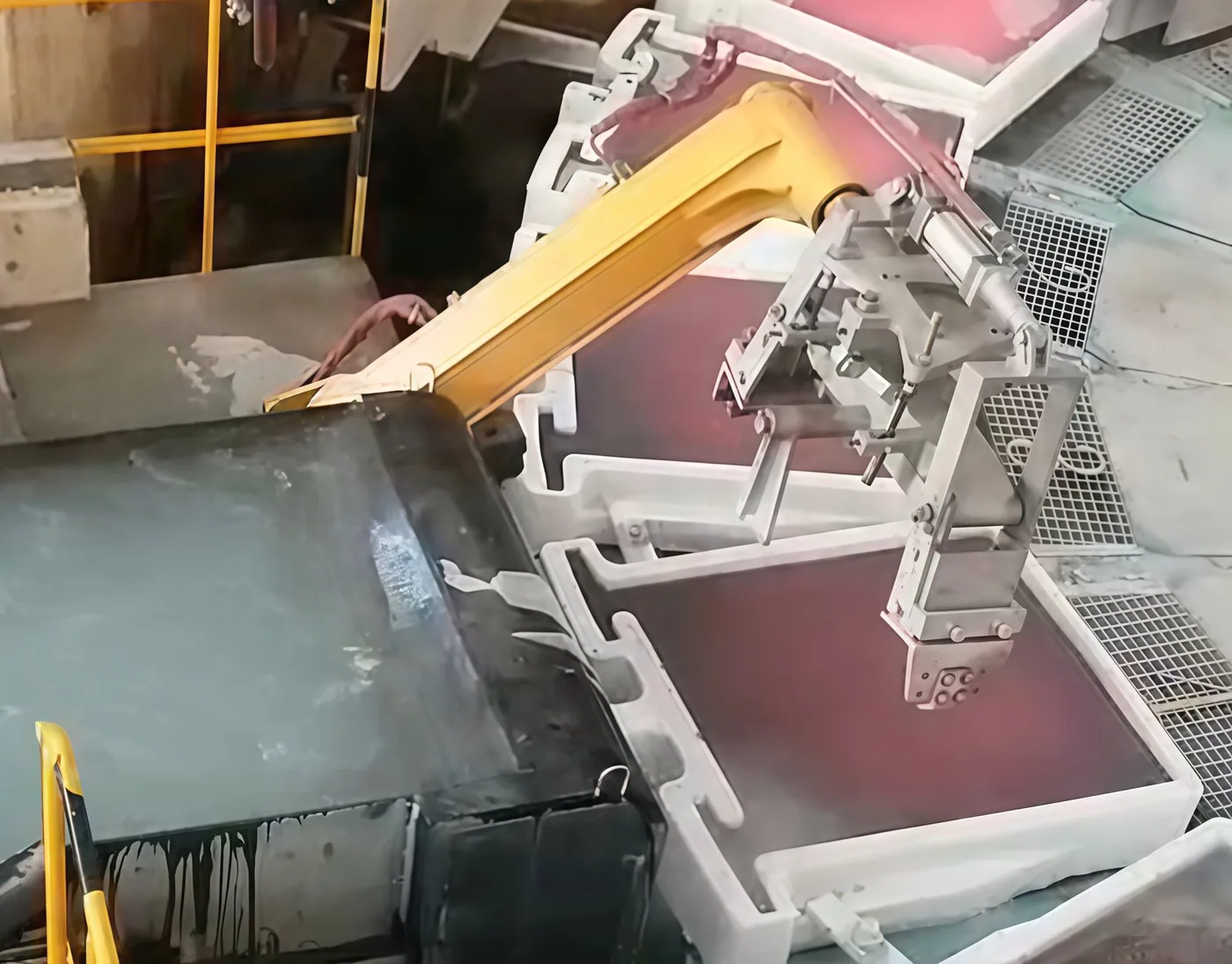
Single-Turntable, Single-Ladle Automatic Quantitative Casting Machine
Fully automatic quantitative casting of copper anodes to the required weight and physical dimensions.
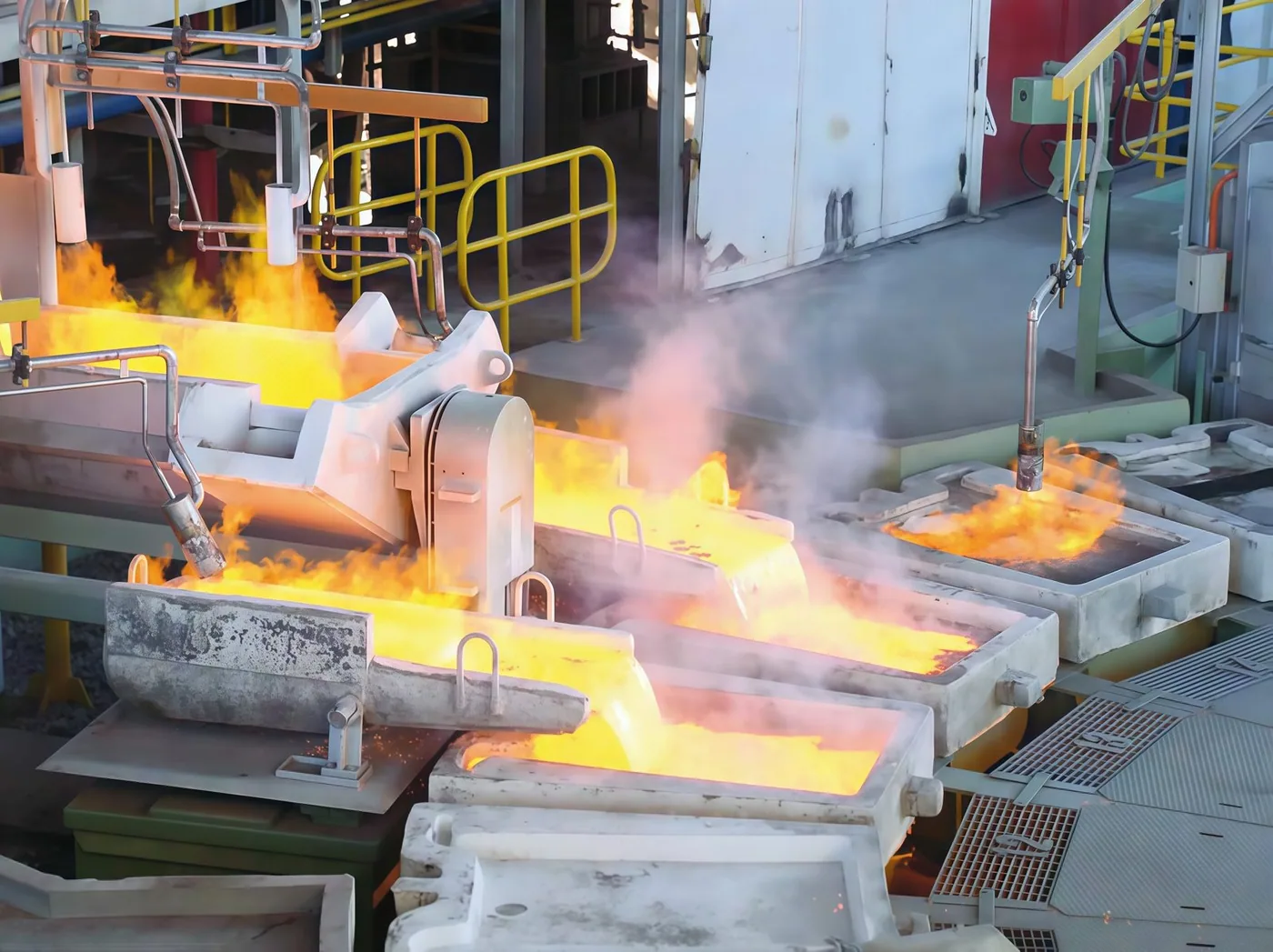
Single-Turntable, Double-Ladle Automatic Quantitative Casting Machine
Fully automatic quantitative casting of copper anodes to the required weight and physical dimensions, using a single disc with two ladles for higher output.
Double-Turntable, Double-Ladle Automatic Quantitative Casting Machine
Fully automatic quantitative casting of copper anodes to the required weight and physical dimensions, using a twin-disc two-ladle arrangement for medium-to-high output.
Send us your specification
Tell us the metal, anode or ingot weight, and required output. An engineer will reply within one business day with a configuration and a quotation.